It was the third Sunday of May 1894 when the Right Honourable Mr Conyers, Member for North Derbyshire, sent for us at half past nine in the morning by a private hansom.
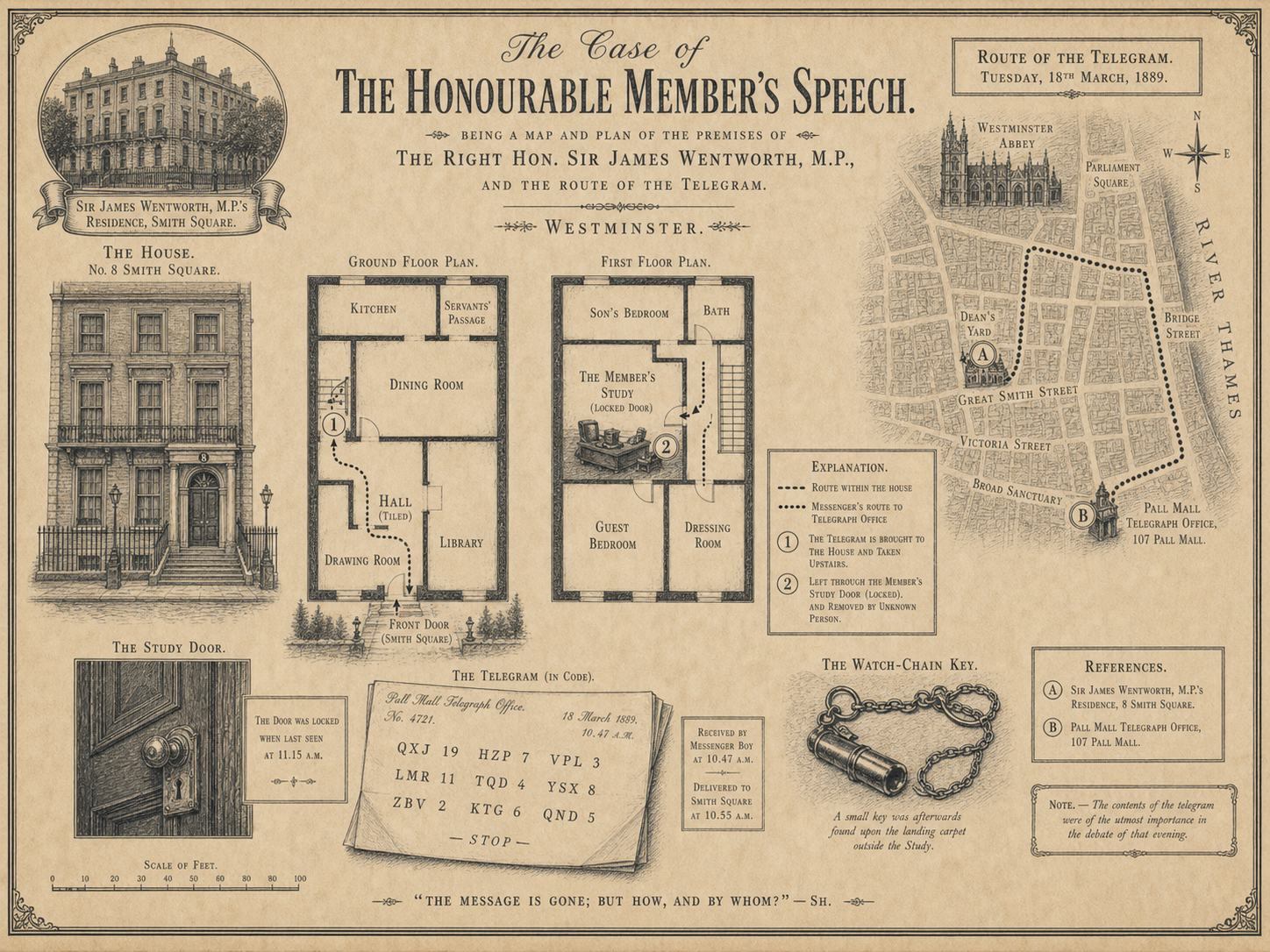
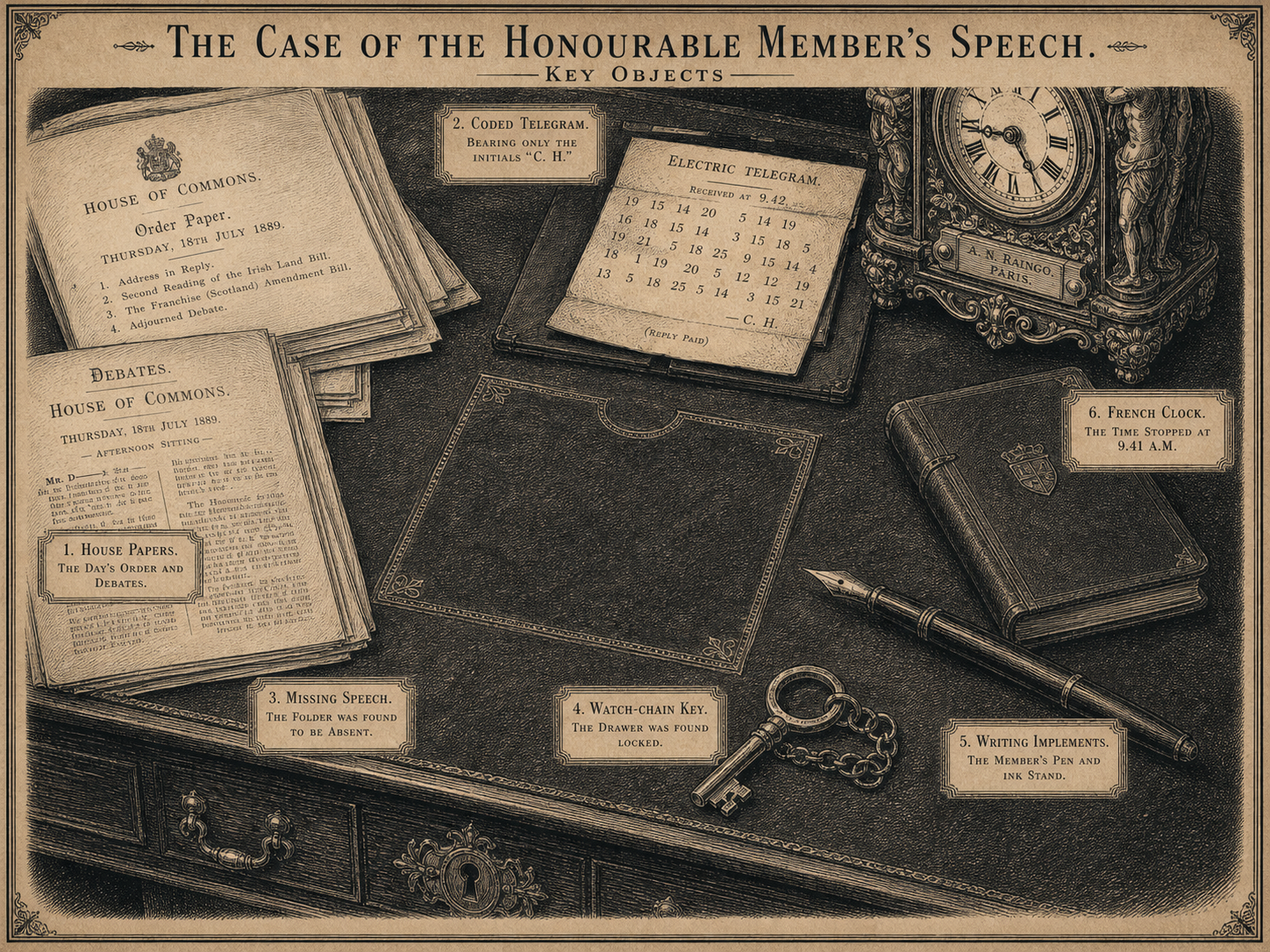
"My speech, Mr Holmes - the speech I am to give in committee on Monday afternoon. The whole government's case for the colonial bill rests upon it. It was upon my study desk last evening at eleven; I locked the study and went up to bed; this morning at half past eight the speech is gone. The study door is sound; the window-catches in order; the keys upon my watch-chain. The vote is in eighteen hours."
We walked across to Mr Conyers's house in Smith Square. On the rank outside the Member's club a thin dark-green four-wheeler waited, the chip on the off-side lamp catching the gas, its driver a heavy-shouldered man with a port-wine stain on his left temple and a green-banded hat; he touched his whip-handle to the brim as we passed.
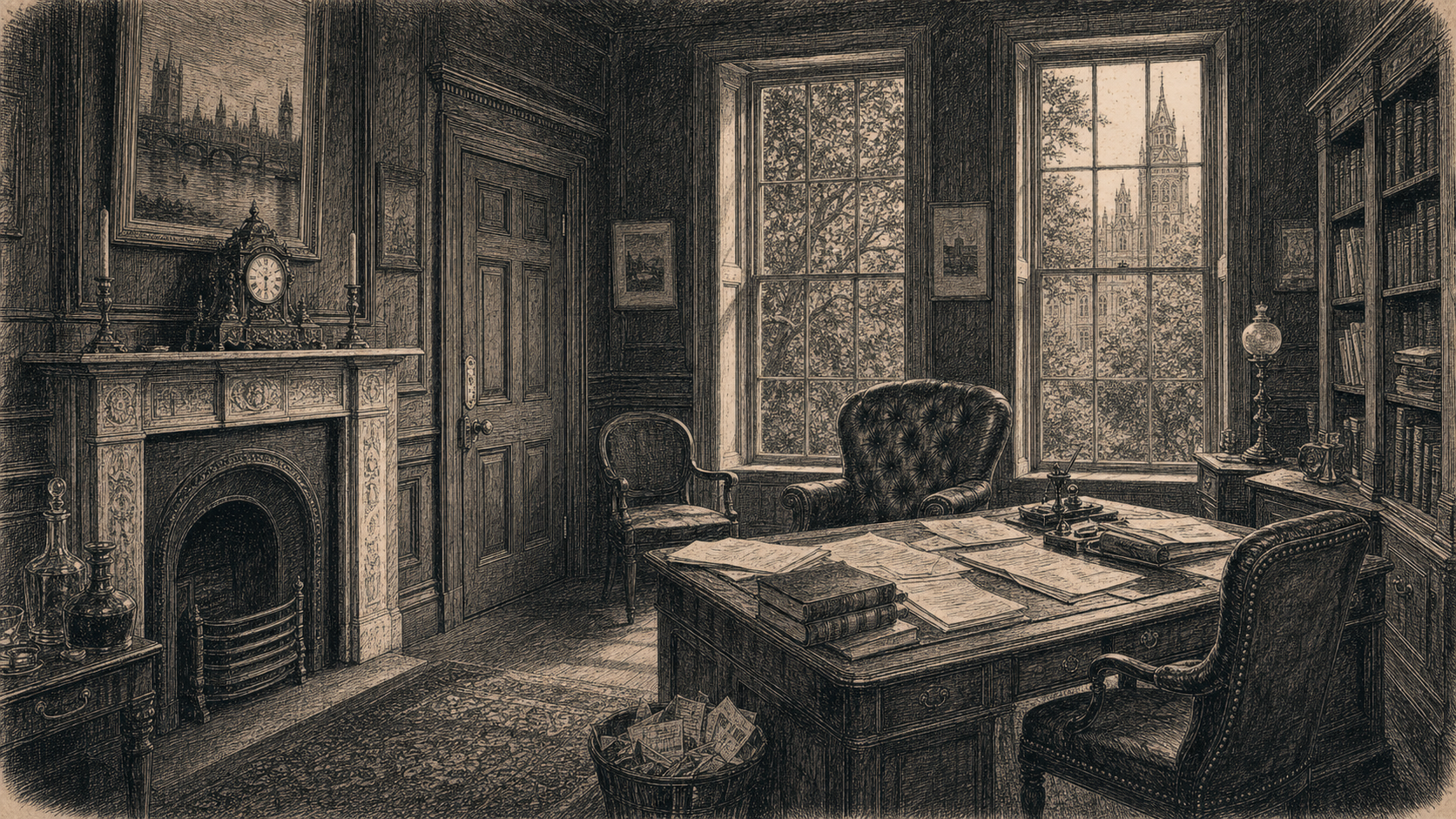
The study was upon the first floor - small, panelled, looking on the Square's chestnut-trees. Five people had had business at the house in the past day: the Member, his secretary, his political opponent (with whom he had dined on Saturday), his son, and a faction-whip of his own party.