The 221B Daily

A new edition from Baker Street every morning.

Wednesday, 4 November 2026 | Difficulty III

The Case of the Wimbledon Codicil

A wealthy aunt dies; her recently-amended codicil leaves a substantial legacy to a six-week companion-nurse. The family contests. Her nephew defends the nurse passionately.

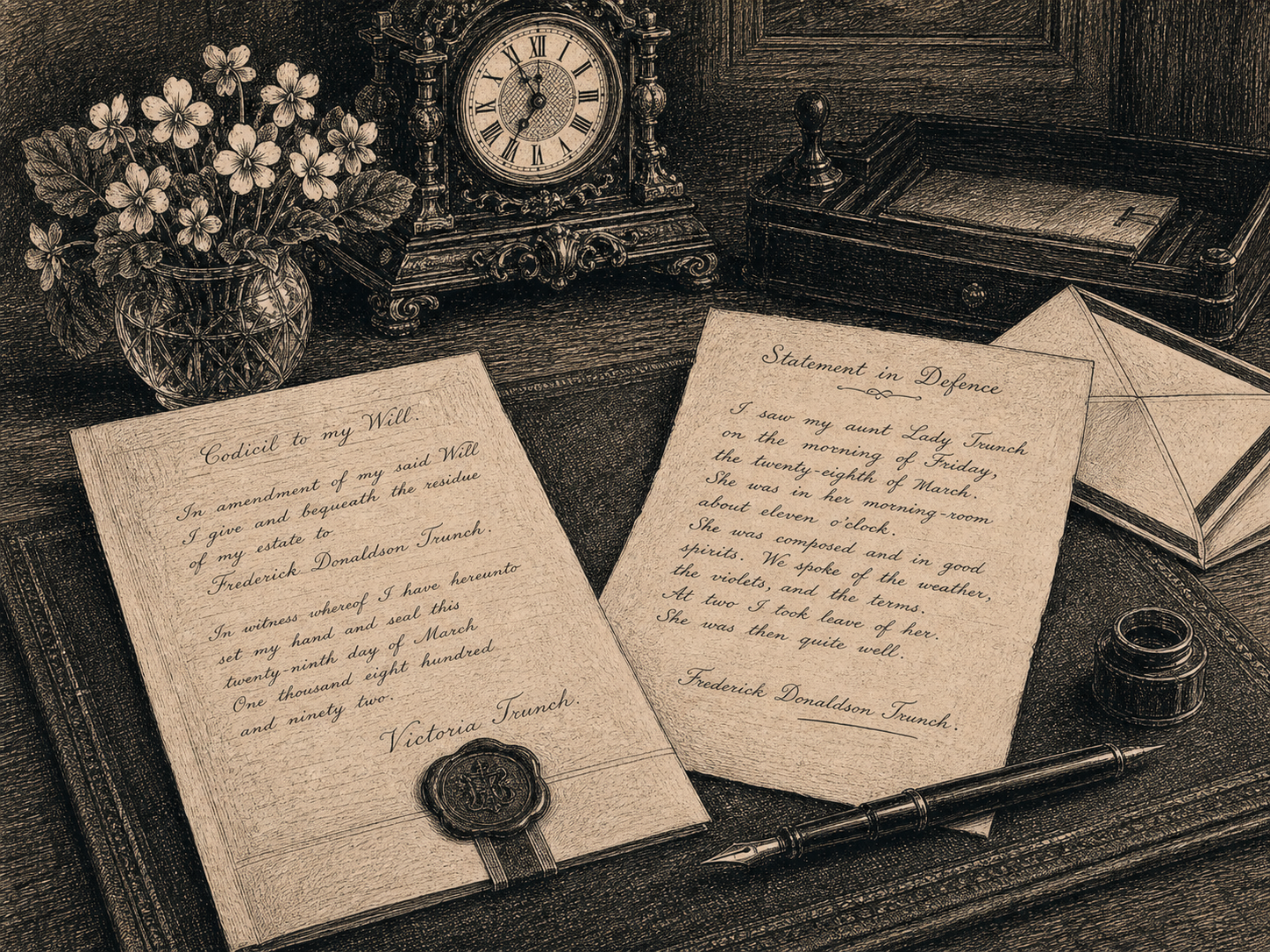
Engraved key object plate for The Case of the Wimbledon Codicil.
Narrated by Dr Watson — the case as it stood before us
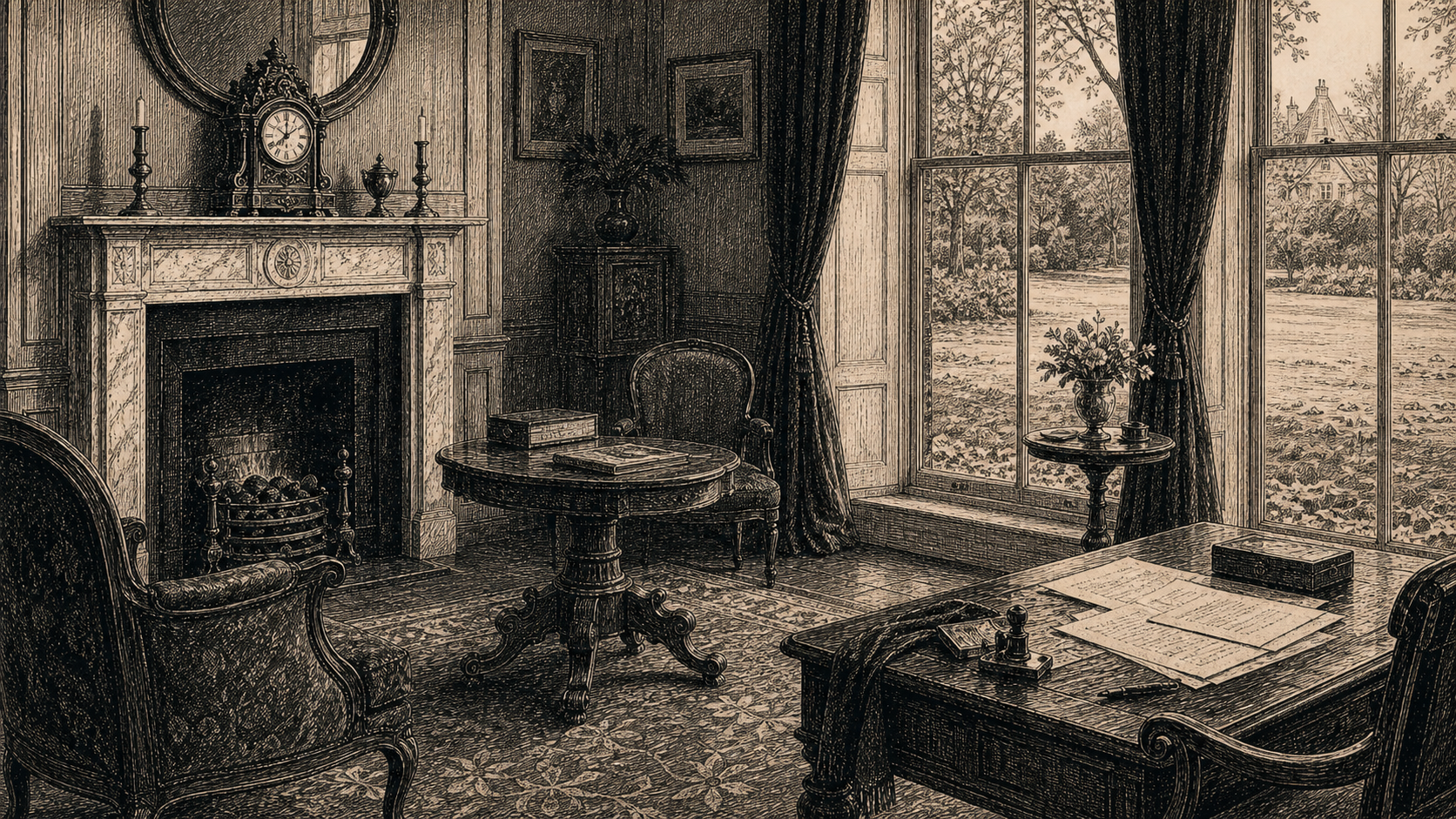
Victorian newspaper-style illustration for The Case of the Wimbledon Codicil, set at Lady Trunch's villa, the Common, Wimbledon.

Section I

The Scene

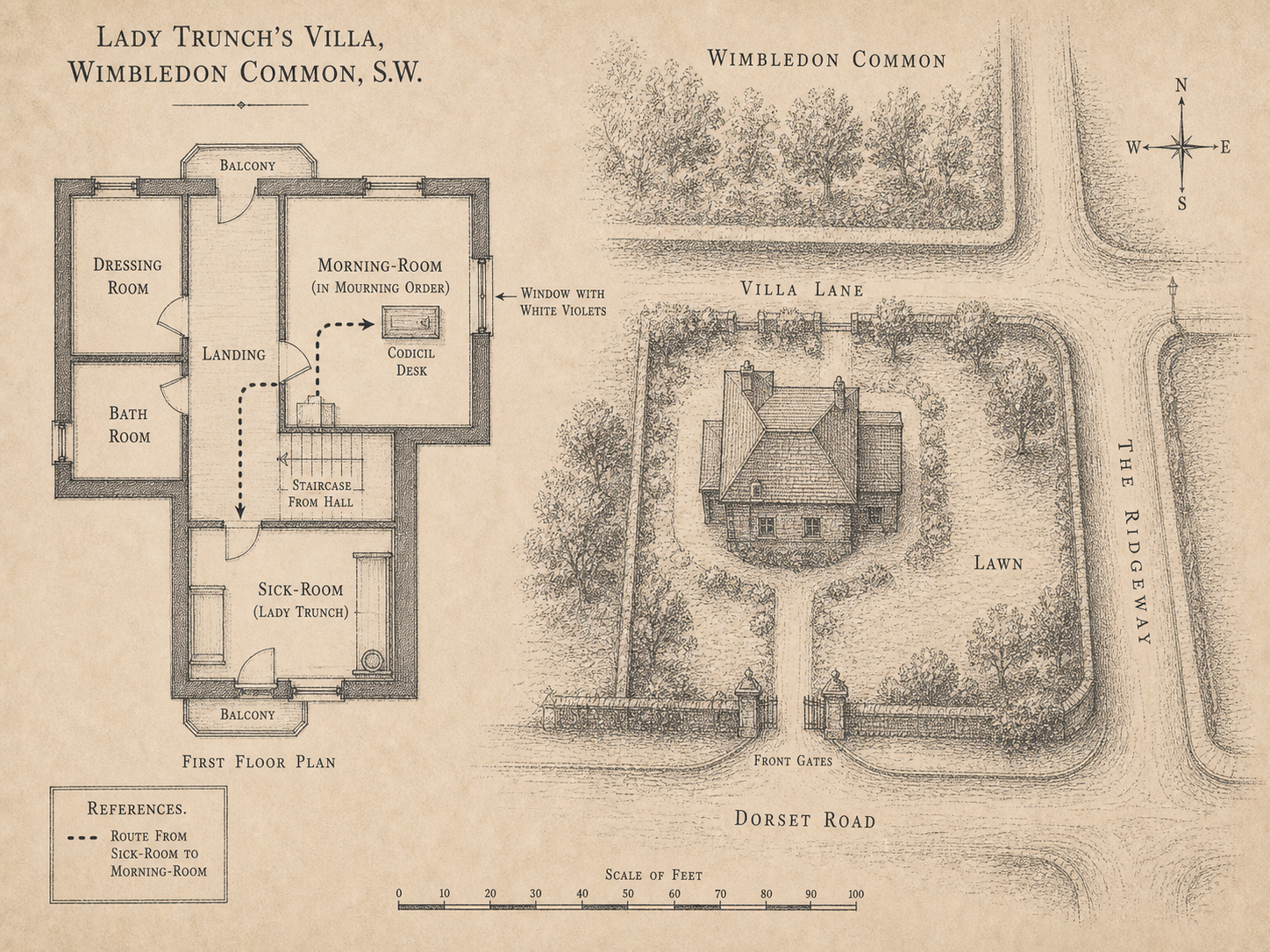
Hand-drawn case map for The Case of the Wimbledon Codicil, showing Lady Trunch's villa, the Common, Wimbledon.
The ground in question.
Setting
Lady Trunch's villa, the Common, Wimbledon
Time
Wednesday afternoon, third Wednesday of October 1892
Weather
Crisp; a bright autumn afternoon; chestnut-leaves on the gravel
Atmosphere
A widow's villa kept in mourning order; long sash windows over a lawn; a French clock on the morning-room mantel; the smell of beeswax and lavender.

Section II

The Suspects

  • Mrs Penleaf

    Sister of the dead woman; the contestant

    A composed widow of fifty, the elder sister and the apparent heir before the codicil. She would have come into half the estate; the codicil reduced her to a third.

  • Miss Cardew

    Companion-nurse, six weeks in the household; the apparent fortune-hunter

    A composed young woman of twenty-six, lately of a Cheltenham nursing-home and well-recommended. She had attended Lady Trunch from the second week of September; the legacy had come as a surprise to her, by her own startled account.

  • Mr Stephen Trunch

    Nephew of the dead woman, City clerk; the warm defender

    A clever, well-mannered young man of twenty-eight, who had been at his aunt's bedside through the last two months and had defended Miss Cardew at length to his uncle by marriage in the morning-room. His defence had been earnest, particular, and at times beyond his strict knowledge of the matter.

  • Mrs Halberd

    Housekeeper, twenty-two years

    A quiet, capable woman of fifty-eight, who had been with Lady Trunch since the first marriage. She had taken the dead woman's last hours alone with the companion-nurse and had not seen the nephew at the bedside in those final twelve.

Section III

The Evidence

  1. The amended codicil

    The codicil had been drawn by the family solicitor at Lady Trunch's instruction on the twenty-eighth of August, witnessed by the housekeeper and the gardener, and lodged at the solicitor's office. It was, on every test, a regular document.

  2. Mr Stephen's defence speech

    The nephew's defence of Miss Cardew, given to his uncle by marriage in the morning-room on Tuesday evening, included a particular and tender description of his aunt's last day - the angle of the autumn sun across her bed, the small white violets the companion-nurse had set in the morning-room window, the very phrasing of his aunt's last sleep.

  3. Mrs Halberd's account of the last hours

    The housekeeper's account placed only Miss Cardew at the bedside through the final twelve hours of Lady Trunch's life. Mr Stephen had come in twice in the afternoon, briefly, and had been at his City lodgings from the eight o'clock train; he had not returned to Wimbledon until the morning of the death.

  4. Miss Cardew's references

    The companion-nurse's references were unimpeachable: a Cheltenham nursing-home of twelve years, a small testimonial from a Mrs Olver of Bath. There was no irregularity in any of them.

  5. Mr Stephen's private understanding

    Holmes asked Mr Stephen, with grave courtesy, whether he had been on any private understanding with Miss Cardew. He hesitated; his colour rose; he said only that he had "hoped, perhaps, in the spring." He had been at her sitting-room three evenings a week through September.

Section IV

Statements & Testimony

  • Miss Cardew

    Companion-nurse

    “"The legacy was a surprise, Mr Holmes. Lady Trunch was a quiet, kind woman; she said in August that she would see me right; I had no notion of the figure. I have nursed eight of these old ladies in twelve years and have had a small brooch from one and a Christmas card from the rest."”

  • Mrs Halberd

    Housekeeper

    “"Mr Stephen was at his aunt's afternoons through September, sir, with Miss Cardew at the sitting-room more than at the bedside. He was at his lodgings from the Monday evening's train. He came down for the morning of the death and not before."”

Section V

Your Verdict

Three picks render a verdict. Name the culprit, choose the method, and nail the keystone clue. We score all three — partial credit if you got the culprit but missed the method, full credit only if you got Holmes’s exact reasoning.

1. Name the culprit
2. Choose the method

Which of these accounts of the deed best matches the evidence?

3. Pick the keystone clue

Of all the evidence above, which single piece nails the case?

Choose a culprit, a method, and a keystone clue to render your verdict.