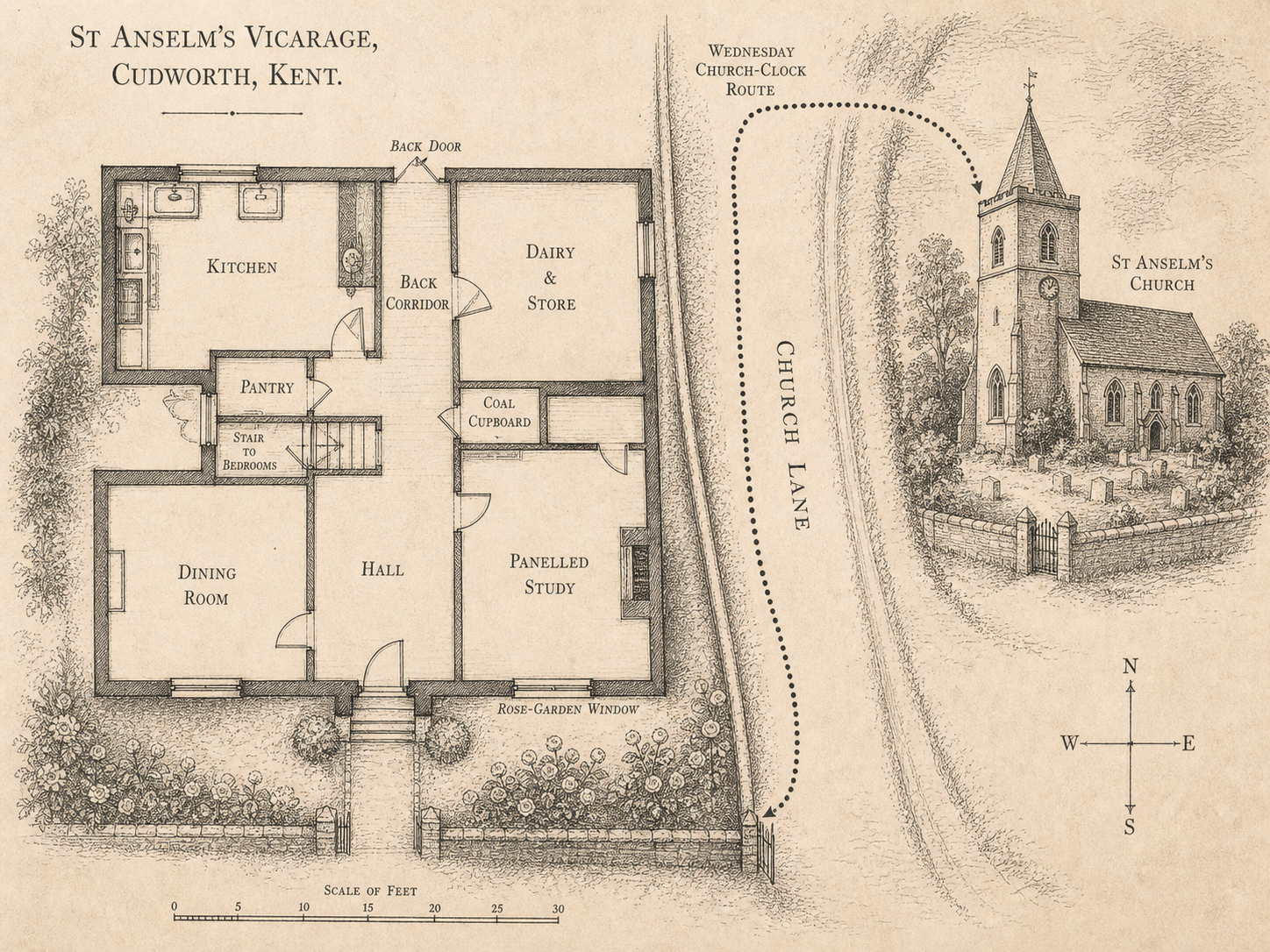
It was the third Monday of August 1893 when a wire from a Kent village called us by an early train.
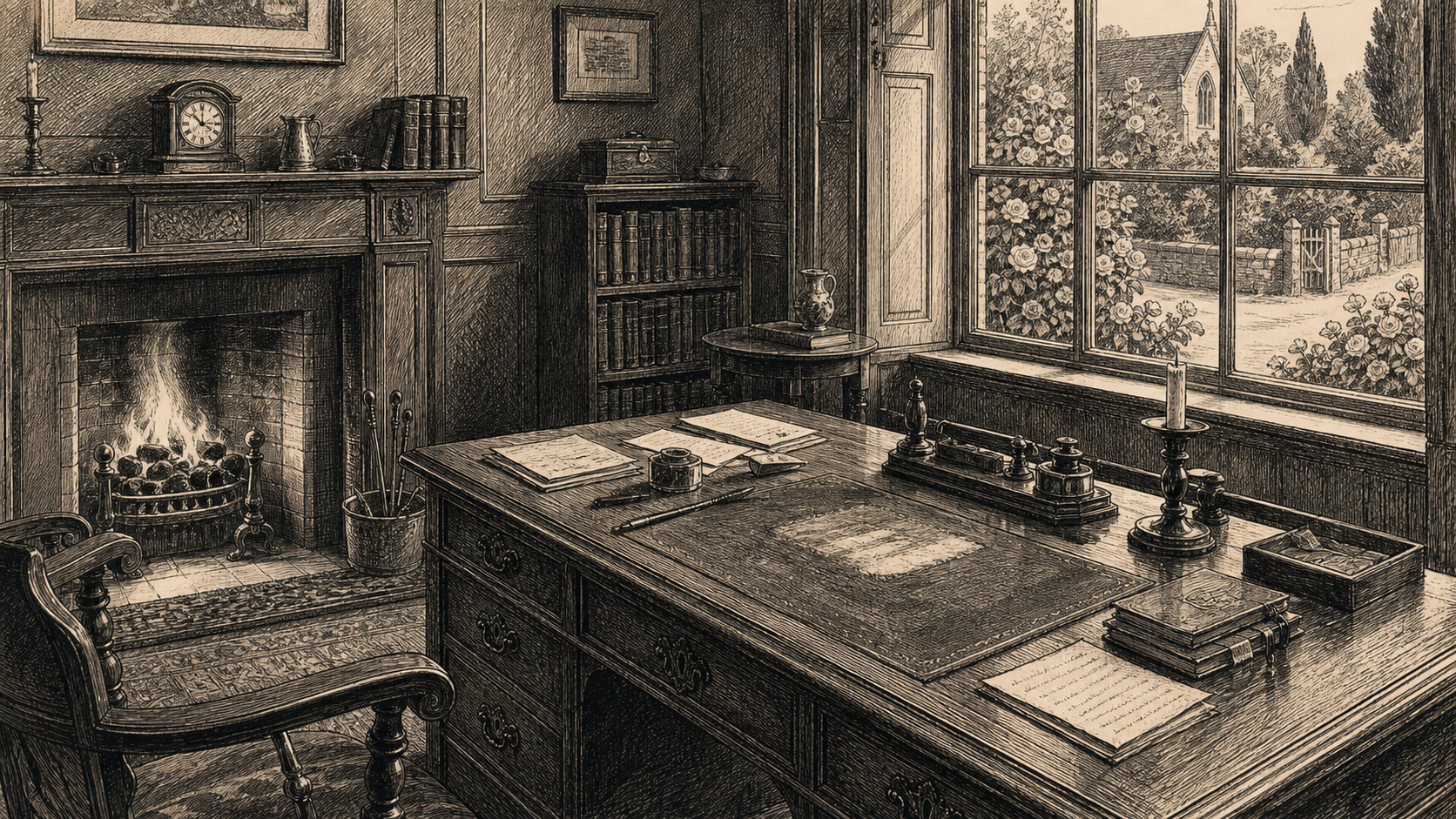
The Reverend Mr Brown of Cudworth had been entrusted, by his bishop, with a 17th-century leather-bound Bible from the parish church for some quiet restoration of its hinges. He had set it upon his study desk on the Wednesday evening; on the Thursday morning the Bible was gone, the study door locked, the window-catches all sound.
We took a hansom from the station to the vicarage. At the door of the village post-office a thin man in a worn grey ulster stood reading a folded *Pall Mall Gazette*; he coughed once into his sleeve and was gone before we crossed the lane.
The Reverend Mr Brown was a kind, distracted gentleman of fifty. He led us into the study, where a single tall window gave on the rose-garden, and proceeded to set out for our consideration the four people who had had any business at the vicarage on the Wednesday evening: his curate, his housekeeper, the village antiquary, and the verger.