The 221B Daily

A new edition from Baker Street every morning.

Friday, 30 October 2026 | Difficulty V

The Case of the Marylebone Anaesthetic

A patient dies under chloroform during a routine operation. The surgeon swears the dose was correct. The husband stands to inherit a small life-insurance.

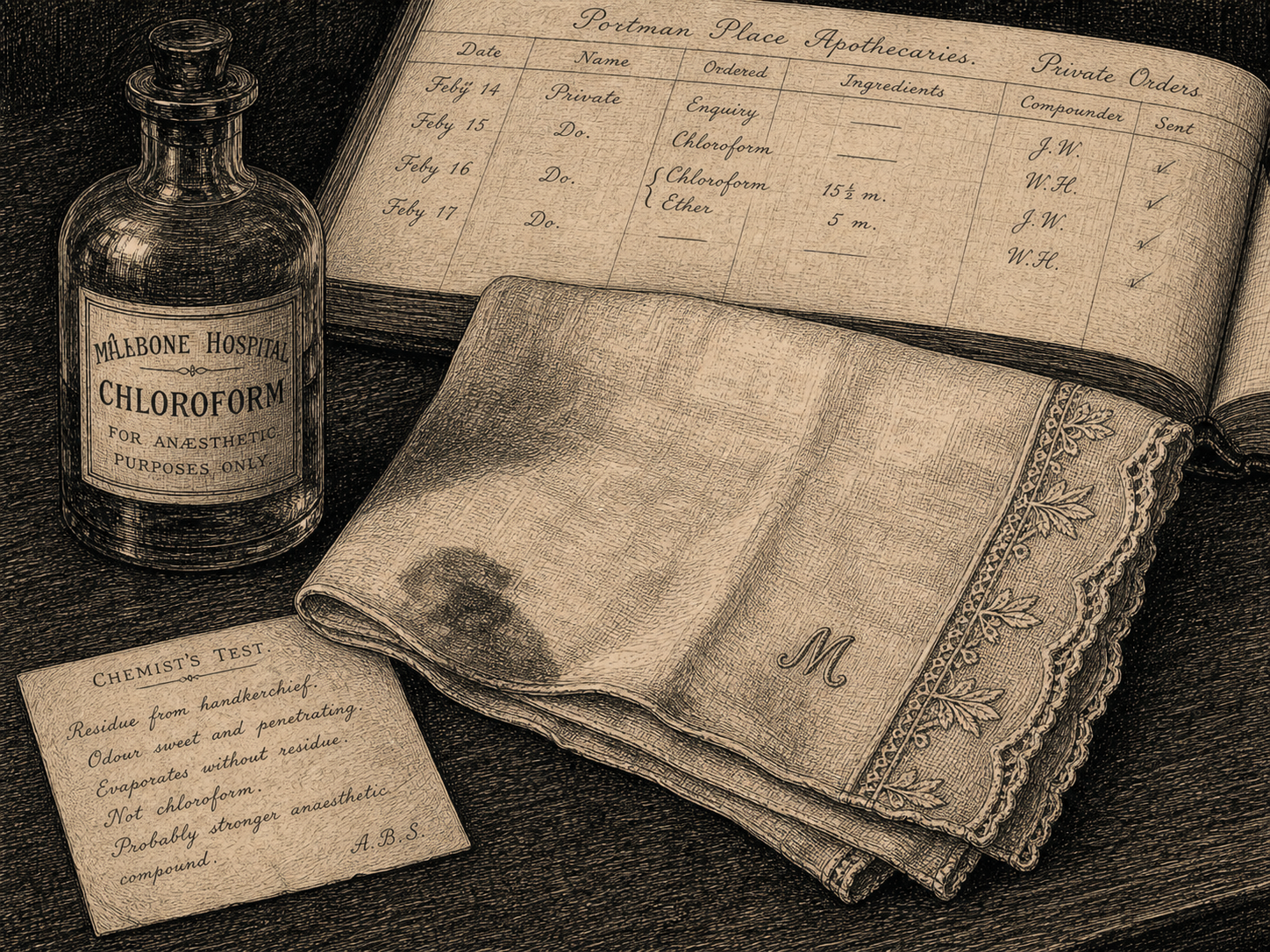
A patient's stained handkerchief beside a chloroform bottle, chemist's test slip, and Portman Place private-order register.
Narrated by Dr Watson — the case as it stood before us
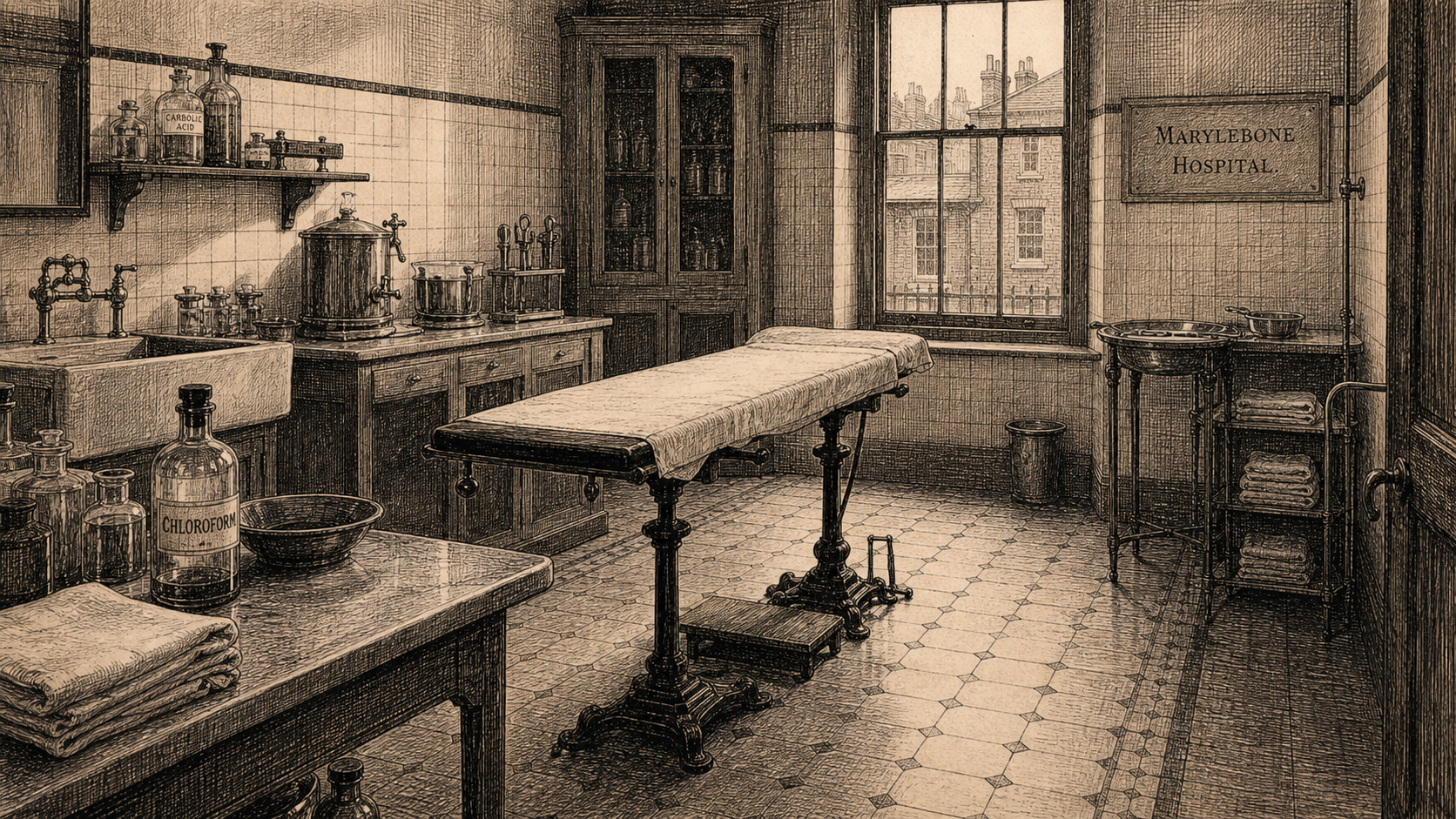
The Marylebone Hospital surgical theatre, empty after a procedure, with chloroform bottle, tiled walls, instruments, and a high window onto the mews.

Section I

The Scene

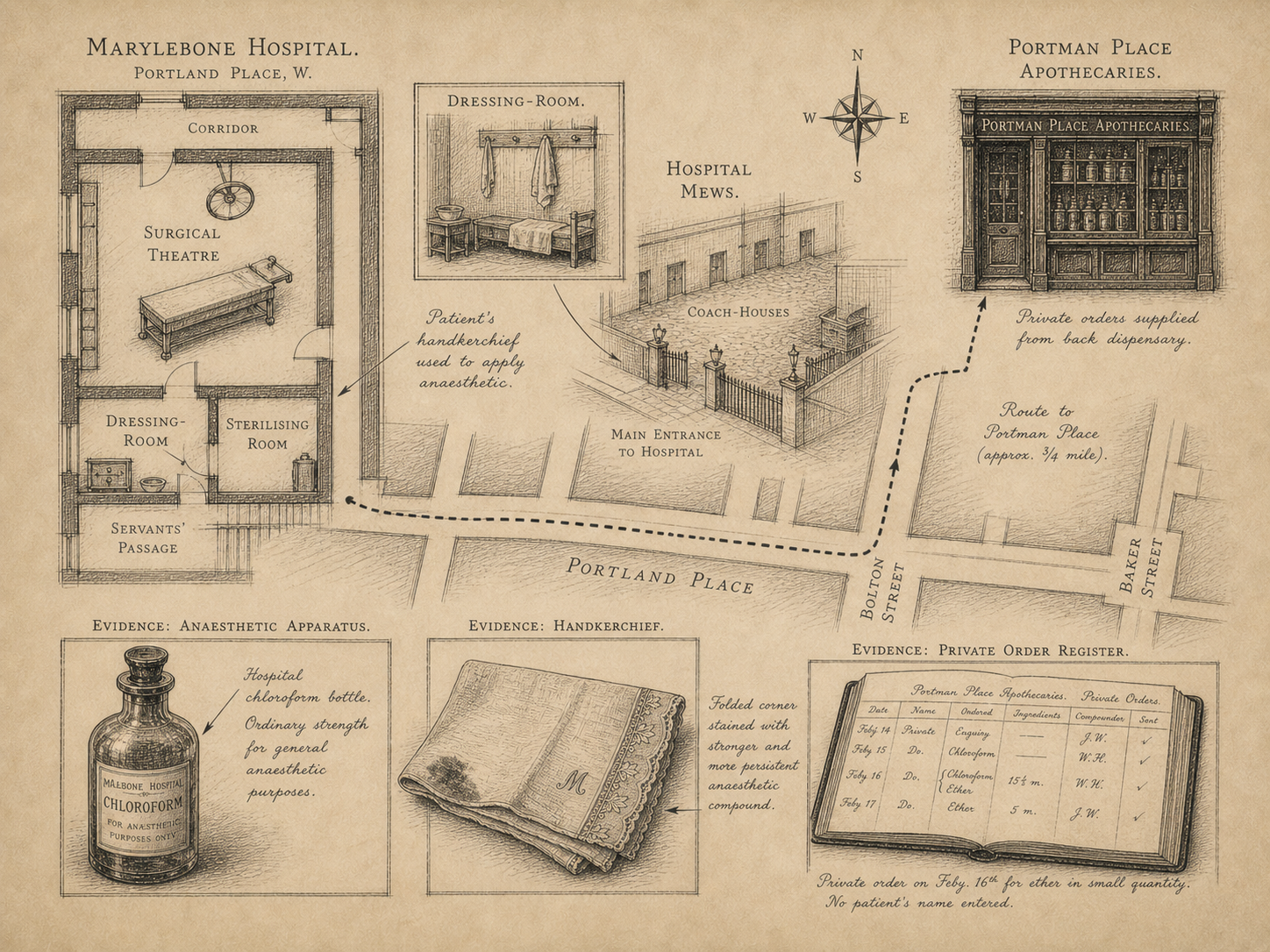
Hand-drawn Marylebone case map linking the hospital theatre and dressing-room to Portman Place apothecary and the handkerchief evidence.
The ground in question.
Setting
The Marylebone Hospital surgical theatre
Time
Friday afternoon, third Friday of February 1894
Weather
Cold; a high winter sky; the hospital quiet at the four o'clock hour
Atmosphere
A small white-tiled theatre, the chloroform-bottle on the dresser; the carbolic-and-iodoform smell of recent surgery; a single high window looking on the mews.

Section II

The Suspects

  • Sir Henley Marsh

    Senior surgeon, the operator

    A grave, careful surgeon of fifty-five, much trusted in the trade. He had performed the procedure as he had performed it a thousand times; he had no quarrel with the patient or her husband.

  • Mr Boon

    Anaesthetist, twelve years

    A precise, soft-spoken man of forty, who had administered the chloroform from a hospital bottle drawn that morning from the apothecary's store. He had no acquaintance with the patient before the morning of the procedure.

  • Mr Lyle

    The patient's husband

    A respectable clerk of thirty-five with a small life-insurance - eighty pounds - upon his wife's life. The premium had been paid two years; the insurance was the household's small precaution. He stood to inherit no other fortune.

  • Mrs Lyle

    The patient

    Twenty-eight, lately of an apparent good health, mother of one. She had concealed, by her sister's later word, a slow heart-trouble that had been weighing upon her these eighteen months past. She had been quieter through the autumn, her sister later said, and had set small private affairs in a careful order; her household had taken it for the season's spirits.

Section III

The Evidence

  1. The hospital's chloroform

    Mr Boon's bottle had been drawn from the apothecary's store at half past two and was, on testing in the apothecary's presence, of the correct strength. The dose he administered, by his careful note, was three drachms - at the rate the procedure required.

  2. Mr Lyle's small insurance

    Mr Lyle's policy upon his wife's life was for eighty pounds, a household's modest precaution. The premiums had been paid for two years and were known to the family solicitor.

  3. The patient's pocket-handkerchief

    On Mrs Lyle's sleeve was a folded pocket-handkerchief; in her own hand, the dressing-room nurse had set it down with her clothes for the operation. Holmes asked, with a quiet courtesy, for the chemist to examine the handkerchief; it bore a faint trace of a stronger compound - not the chloroform of the hospital bottle, but a related substance dispensed only at private apothecaries.

  4. An anonymous private order at Portman Place

    The Portman Place apothecary kept, beside his public day-book, a small "private order" register - three dispensings of the stronger anaesthetic compound entered between October and December against fees paid in cash. The chemist could put no name to the orders on his own evidence; only a residue match could identify the patient.

  5. Mrs Lyle's letter to her sister

    In the bottom of Miss Pyott's writing-desk drawer lay a letter from Mrs Lyle written three weeks before the operation, asking her sister to "be a kindly aunt to little Mary in any future where my health no longer permits me to be a mother." The letter set down no operation, named no occasion, and could be read as a heart-condition-aware mother's general provision.

Section IV

Statements & Testimony

  • Mr Boon

    Anaesthetist

    “"Three drachms, sir, drawn from the hospital's bottle at half past two. Administered at the procedure's rate; the patient went under at four; she did not return. The bottle is upon the dresser still. I have given her no more and no less than I have given a hundred others. I cannot say what occurred."”

  • Miss Pyott

    Mrs Lyle's elder sister

    “"Audrey has had a slow heart, Mr Holmes - these eighteen months past. The doctors had given her two years, perhaps three. She had been quieter through the autumn; she had set her affairs in some careful order, written letters to old friends. I had thought it the natural turn of a young invalid in a fearful season. I cannot say more."”

Section V

Your Verdict

Three picks render a verdict. Name the culprit, choose the method, and nail the keystone clue. We score all three — partial credit if you got the culprit but missed the method, full credit only if you got Holmes’s exact reasoning.

1. Name the culprit
2. Choose the method

Which of these accounts of the deed best matches the evidence?

3. Pick the keystone clue

Of all the evidence above, which single piece nails the case?

Choose a culprit, a method, and a keystone clue to render your verdict.