The 221B Daily

A new edition from Baker Street every morning.

Tuesday, 13 October 2026 | Difficulty II

The Case of the Whitechapel Steward's Ledger

An auditor finds the meat-bills at a Whitechapel charity hospital running thirty pounds high. Four men handle the books. None will say why.

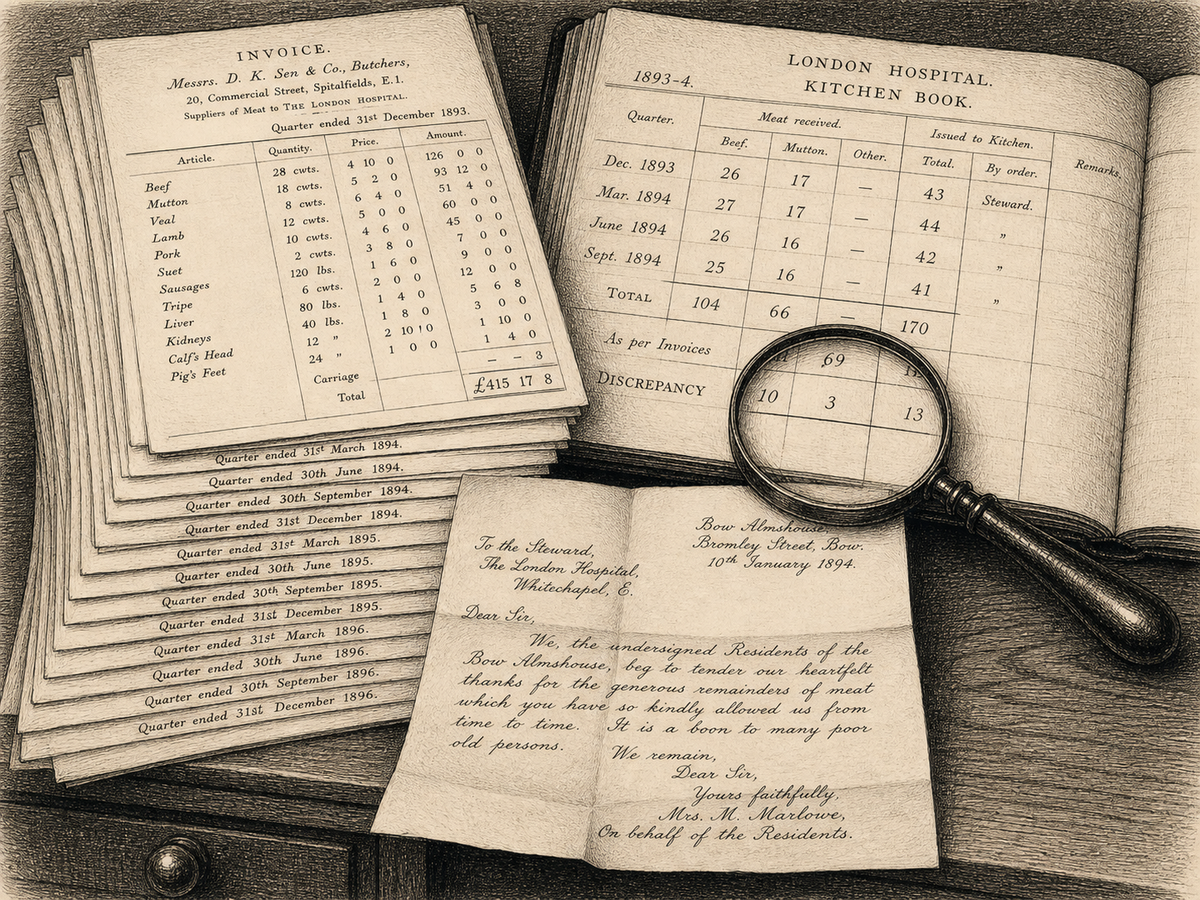
Engraved key object plate for The Case of the Whitechapel Steward's Ledger.
Narrated by Dr Watson — the case as it stood before us
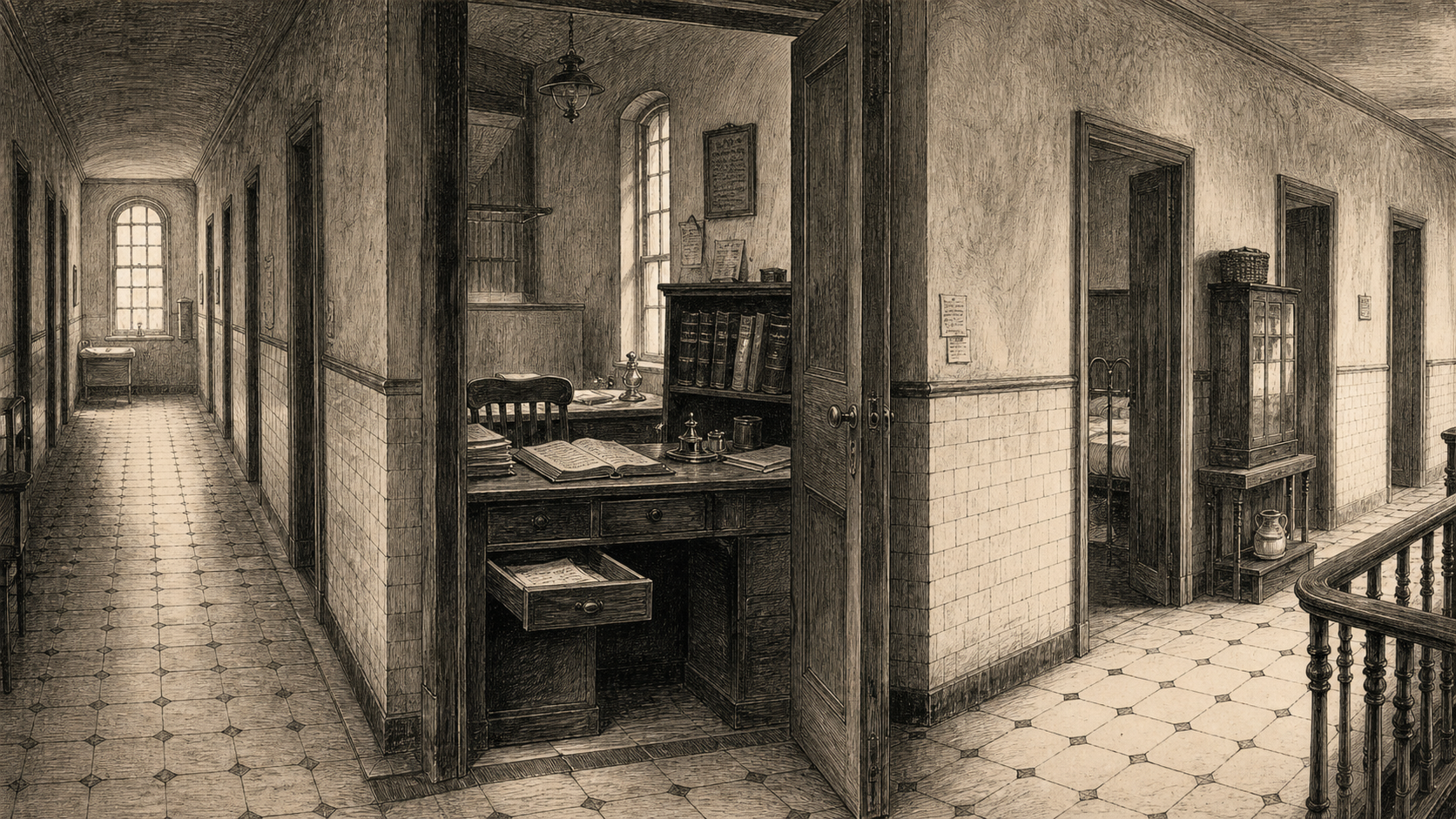
Victorian newspaper-style illustration for The Case of the Whitechapel Steward's Ledger, set at The East End Charity Hospital, Mile End Road, Whitechapel.

Section I

The Scene

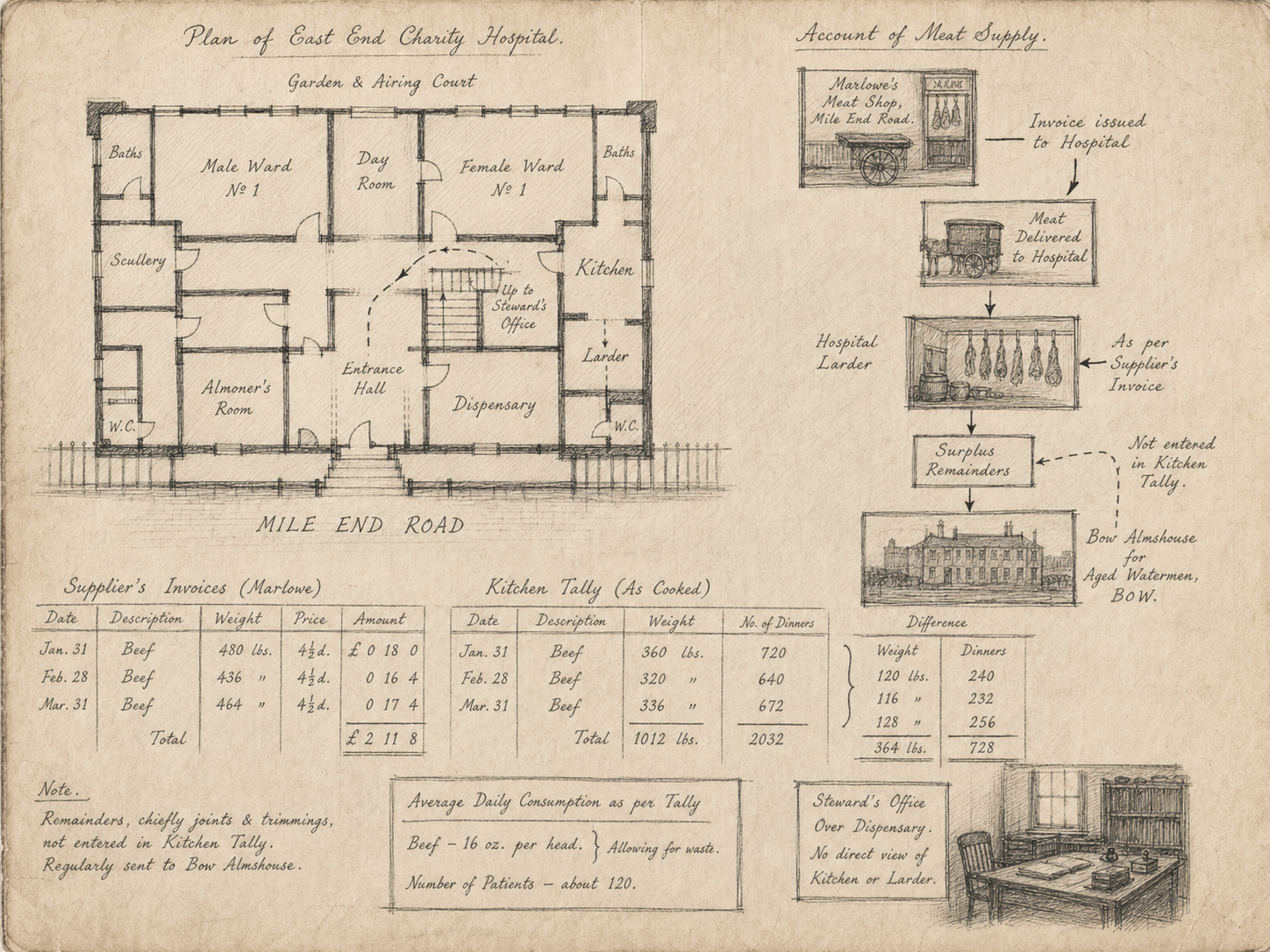
Hand-drawn case map for The Case of the Whitechapel Steward's Ledger, showing The East End Charity Hospital, Mile End Road, Whitechapel.
The ground in question.
Setting
The East End Charity Hospital, Mile End Road, Whitechapel
Time
Tuesday, third week of July 1892
Weather
Hot; the air heavy with horse-dust and the river's tide
Atmosphere
Long whitewashed corridors smelling of carbolic; nurses' shoes on tile; a steady moan from the open ward at the stair-foot.

Section II

The Suspects

  • Mr Pell

    Steward of the hospital, eight years in post

    A grey-bearded man of fifty-five, careful and slow-spoken, who keeps the meat-account in his own hand. His clothes were neither shabby nor showy. He had taken no holiday in three years and his bank-book, freely produced, showed no irregular deposit.

  • Mr Marlowe

    Meat-supplier to the hospital, fifteen years' contract

    A florid, broad-shouldered tradesman of forty, with a small shop on Whitechapel High Street and an interest in a brother's slaughtering-yard at Bow. His invoices to the hospital ran some thirty pounds a quarter higher than the matron's larder showed in cooked dinners.

  • Mr Crowther

    Almoner, raises subscriptions for the hospital

    A stout, evangelical man of forty-five, who had pressed the trustees for two years to fund a new fever-ward by economies on subscription. He defended Mr Pell, the supplier, and the deputy in turn, and did so at length and unprompted.

  • Mr Whaite

    Deputy steward, three years in post

    A thin man of thirty, with a sick wife in Stepney and four children under nine. He had access to the kitchen-book but not to the supplier's account. He was, by Mr Pell's account, a steady worker, if a tired one.

Section III

The Evidence

  1. The meat-supplier's invoices

    Twelve quarterly invoices from Mr Marlowe to the hospital, each running between five and eight pounds higher than the kitchen-book's tally of cooked dinners. The discrepancy was steady - never wild, never absent.

  2. Mr Pell's bank-book

    The steward's bank-book, produced without reluctance, showed his salary credited monthly and small steady withdrawals for ordinary expenses. There was no deposit to match the missing thirty pounds a quarter, no purchase of consequence.

  3. Mr Crowther's fever-ward subscription

    The almoner had launched, eighteen months before, a subscription for a new fever-ward. Three hundred pounds had been raised; none yet spent. He was, he said, holding the money for the right architect.

  4. An unanswered letter in the steward's drawer

    Holmes, asking to see Mr Pell's correspondence, found a letter dated April: a Mrs M. Marlowe of the Bow Almshouse for Aged Watermen, thanking the hospital steward for "the generous remainders of last quarter's supply, which fed our forty pensioners through Lent." The letter was unanswered, and Mr Pell professed never to have read it.

  5. Mr Whaite's salary book

    The deputy's wages were thirty-eight pounds the year, and the hospital's pay-book showed every quarter signed and paid in full to him.

Section IV

Statements & Testimony

  • Mr Pell

    Steward

    “"The accounts are mine, Mr Holmes. The meat is bought against the supplier's invoice each quarter; the matron sets out the dinners; what is left is left. I have asked Mr Marlowe twice why his bills run heavy, and twice he has said the prices have gone heavy with him. I have not pressed it. I had no notion of any other charity than this one."”

  • Sister Maud

    Matron of the hospital

    “"My larder is what my pay-book says, sir. The carcases come down from Mr Marlowe's yard at four o'clock on a Tuesday and a Friday; what we cook is for the wards. There is always a parcel set aside on a Friday for Mr Marlowe's man to take back - bones, a little meat, the trimmings of the joint. It has gone that way these years. I had thought it for his own kitchen."”

Section V

Your Verdict

Three picks render a verdict. Name the culprit, choose the method, and nail the keystone clue. We score all three — partial credit if you got the culprit but missed the method, full credit only if you got Holmes’s exact reasoning.

1. Name the culprit
2. Choose the method

Which of these accounts of the deed best matches the evidence?

3. Pick the keystone clue

Of all the evidence above, which single piece nails the case?

Choose a culprit, a method, and a keystone clue to render your verdict.