The 221B Daily

A new edition from Baker Street every morning.

Tuesday, 16 June 2026 | Difficulty II

The Case of the Anonymous Letters

Anonymous letters circulate at a Bath girls' school accusing the headmistress of a scandal. The parents are demanding answers. The senior pupil is in the dock by Friday.

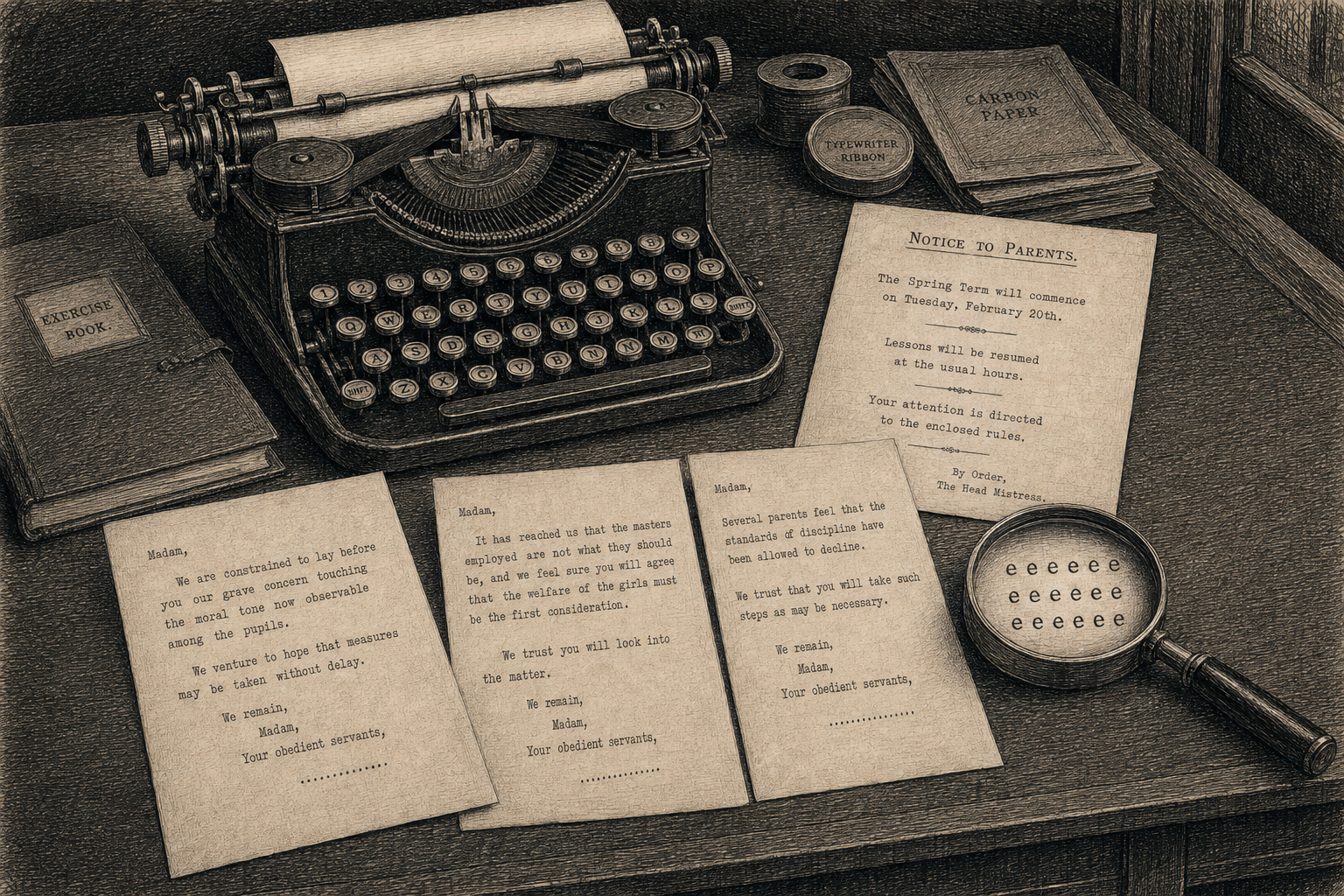
Engraved key object plate for The Case of the Anonymous Letters.
Narrated by Dr Watson — the case as it stood before us
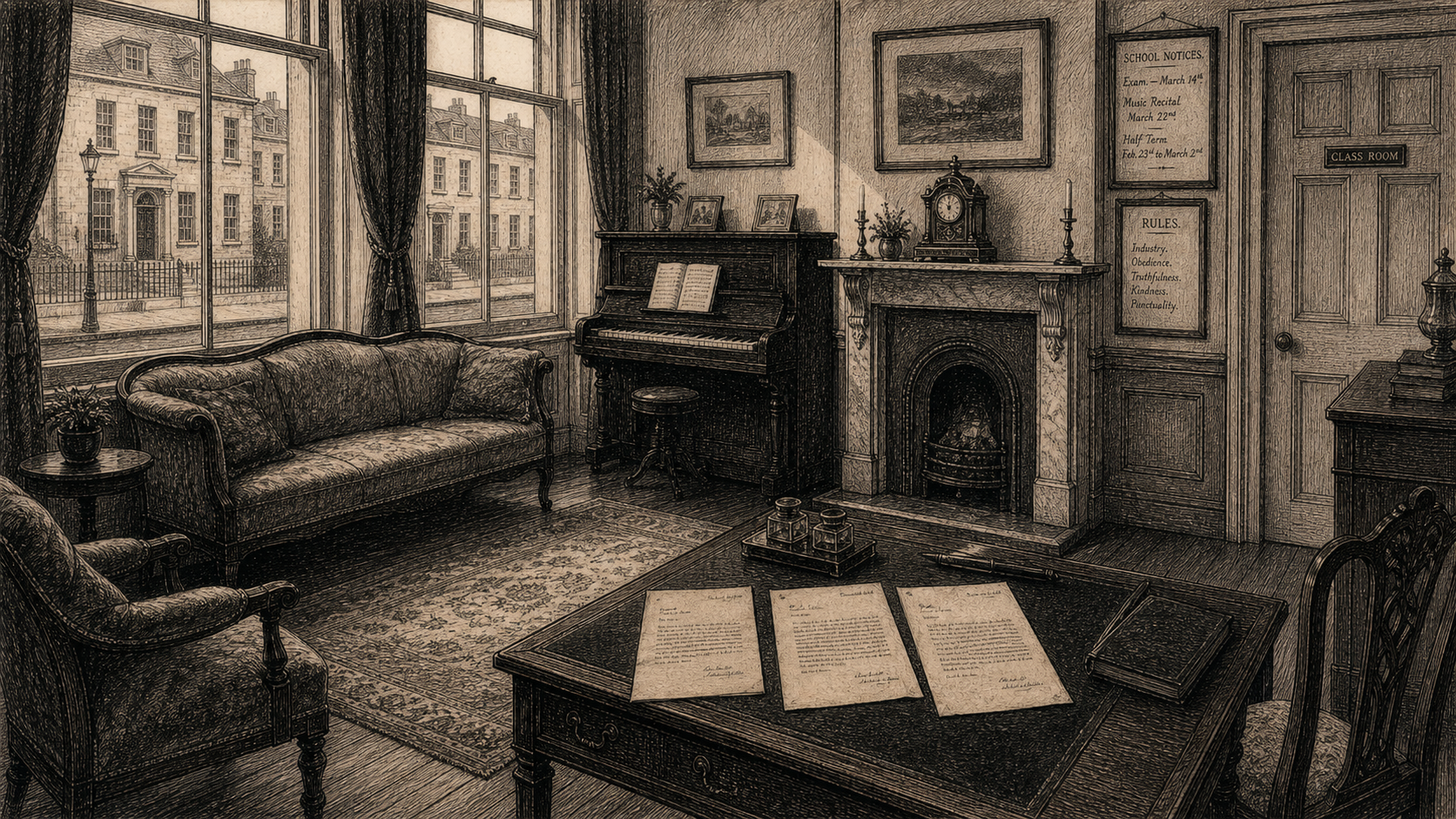
Victorian newspaper-style illustration for The Case of the Anonymous Letters, set at The Henrietta Street School for Young Ladies, Bath.

Section I

The Scene

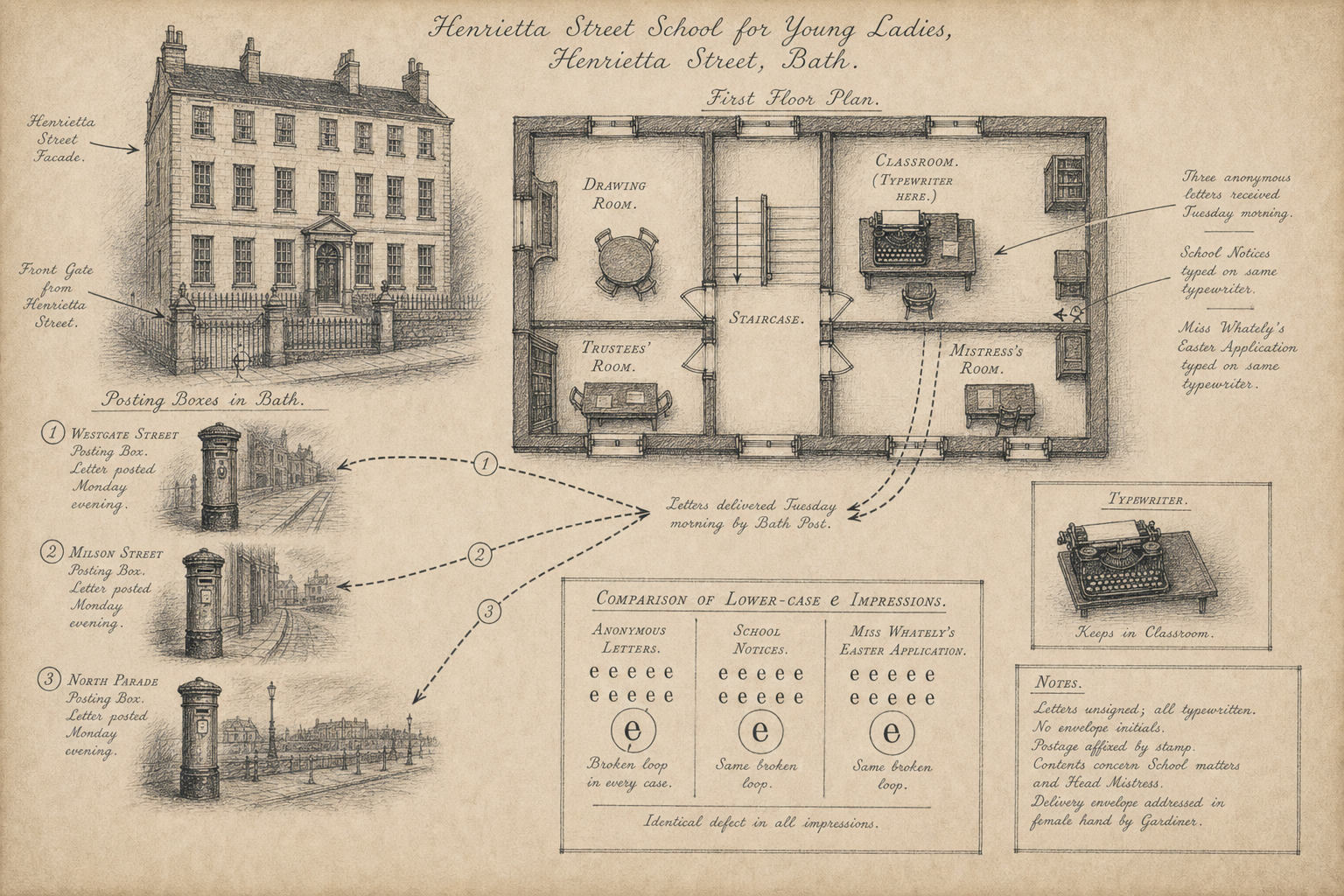
Hand-drawn case map for The Case of the Anonymous Letters, showing The Henrietta Street School for Young Ladies, Bath.
The ground in question.
Setting
The Henrietta Street School for Young Ladies, Bath
Time
Tuesday, second Tuesday of February 1894
Weather
Crisp; a bright winter sun on the Bath stone
Atmosphere
A respectable girls' school in a Georgian terrace; long sash windows on a quiet street; a French clock on the drawing-room mantel.

Section II

The Suspects

  • Mrs Mortimer

    Headmistress, the client

    A composed, capable woman of forty-five, twenty years in the school, the eighth headmistress of the establishment. She had introduced certain modern methods which had been disapproved by the chaplain and one or two trustees.

  • Miss Carew

    Senior pupil, due to be expelled for ill conduct

    A high-spirited young lady of seventeen, who had quarrelled in the autumn with a junior mistress and faced expulsion at the trustees' meeting on Friday. She had been heard to speak ill of the headmistress in private corners.

  • Miss Whately

    Junior mistress, French and Drawing

    A precise, dark-haired woman of thirty-four, who had been passed over for the chief mistress's place at Easter when Mrs Mortimer's modern reforms went forward. She had taken her disappointment quietly and had retained a typewriter of her own, with which she set the school's printed notices.

  • The Reverend Mr Pyke

    School chaplain

    A lean, scrupulous clergyman of fifty, who had voiced his disapproval of Mrs Mortimer's methods in three vestry meetings. He had no typewriter and no clerical secretary, his notices being all in his own hand.

Section III

The Evidence

  1. The three anonymous letters

    The letters were typewritten on small octavo sheets, posted at three different Bath letter-boxes, and signed only "a parent." The typewriter showed a slight fault in the lower-case e, in which a faint break appeared in the loop of every impression.

  2. Miss Carew's autumn quarrel

    The senior pupil's quarrel with Miss Whately had been over a dropped sketchbook and a sharp remark; it had ended in Miss Carew's expulsion-notice for the trustees' Friday meeting.

  3. Miss Whately's typewriter

    Miss Whately's typewriter sat upon a small mahogany desk in her own classroom. Holmes asked, with a quiet courtesy, to type a sample sentence. Under his lens the lower-case e showed the same faint break in the loop, and the paper bore the same impression-shadow as the anonymous letters.

  4. The Easter passing-over

    Mrs Mortimer's modern reforms had carried at the Easter trustees' meeting; Miss Whately had been passed over for the chief mistress's place. Her own application had been seven pages long, in her own typewritten copy, and was upon the trustees' desk still.

  5. Mr Pyke's correspondence

    The chaplain's letters to the trustees had been all in his own hand on plain ruled paper. He had written ten in the past year. None had been typewritten; none touched upon any private matter beyond the school's curriculum.

Section IV

Statements & Testimony

  • Miss Whately Partial

    Junior mistress

    “"I am sorry for Mrs Mortimer's troubles, sir. I have heard the rumours from Miss Carew's set; the girls will say anything in a winter term. I have my own typewriter for the school's printed notices, certainly; the trustees know it."”

  • Mr Pyke Reliable

    School chaplain

    “"I have not approved of certain of Mrs Mortimer's reforms, Mr Holmes, and have said so in the vestry. But the letters are wicked; I would never have set my hand to such a thing, nor any clerical secretary at my desk. I have never owned a typewriter."”

Section V

Your Verdict

Three picks render a verdict. Name the culprit, choose the method, and nail the keystone clue. We score all three — partial credit if you got the culprit but missed the method, full credit only if you got Holmes’s exact reasoning.

1. Name the culprit
2. Choose the method

Which of these accounts of the deed best matches the evidence?

3. Pick the keystone clue

Of all the evidence above, which single piece nails the case?

Choose a culprit, a method, and a keystone clue to render your verdict.