The 221B Daily

A new edition from Baker Street every morning.

Saturday, 13 June 2026 | Difficulty V

The Case of the Shipping Clerk's Inkstand

A shipping clerk is found dead in his locked office on a Saturday morning. Apparent stroke. Then someone notices the inkstand has been moved.

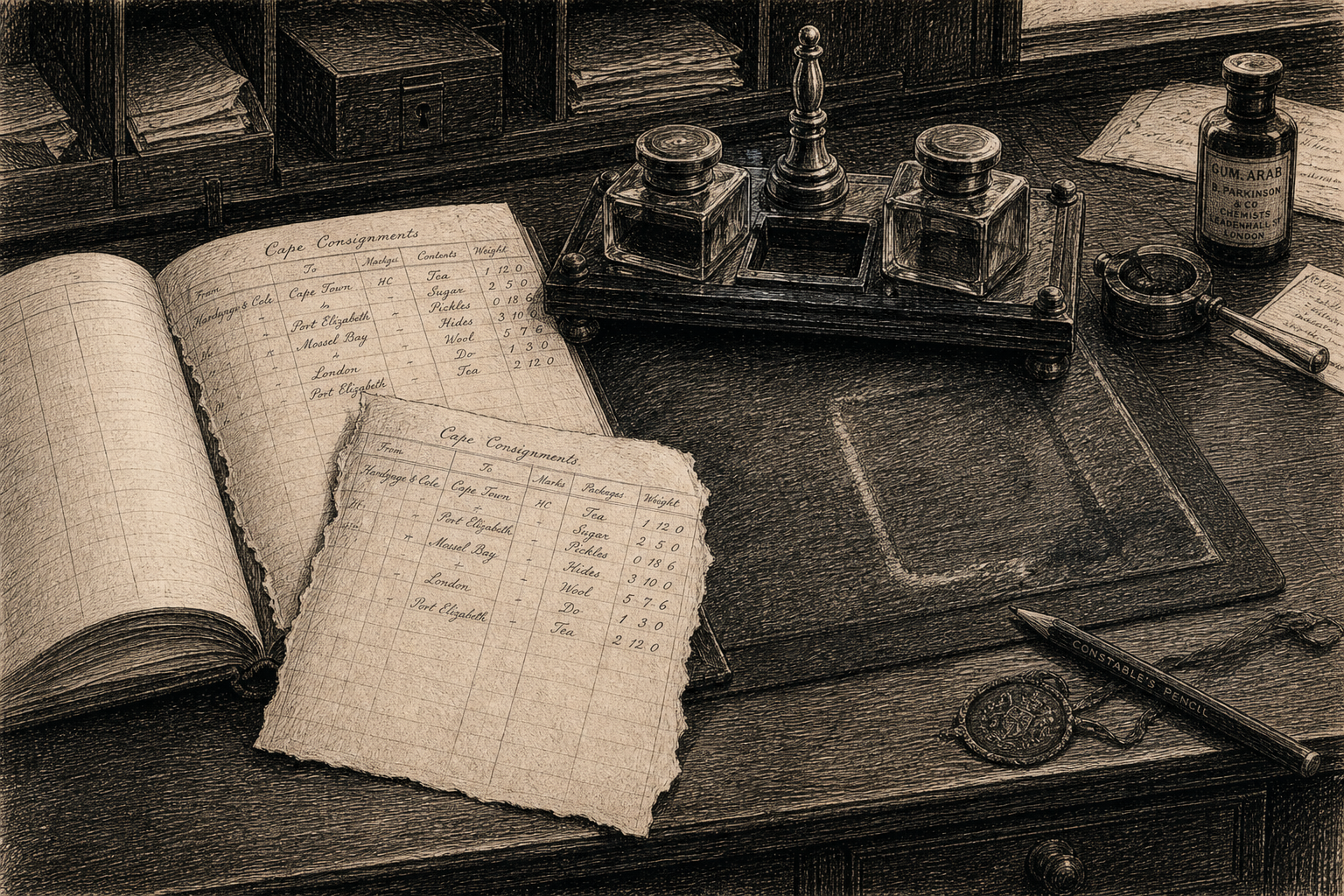
Engraved key object plate for The Case of the Shipping Clerk's Inkstand.
Narrated by Dr Watson — the case as it stood before us
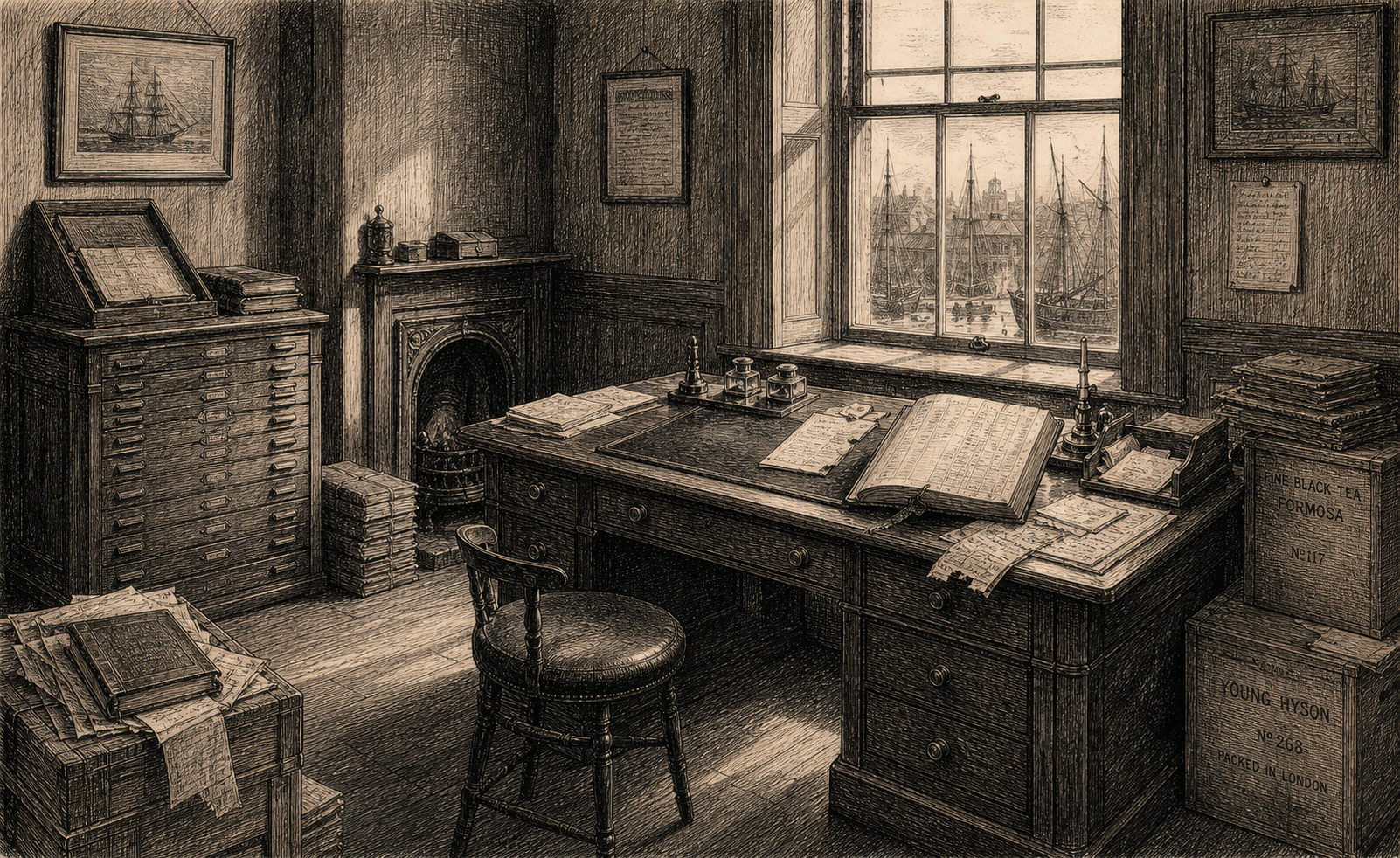
Victorian newspaper-style illustration for The Case of the Shipping Clerk's Inkstand, set at Hardynge & Cole, shipping brokers, Leadenhall Street, City of London.

Section I

The Scene

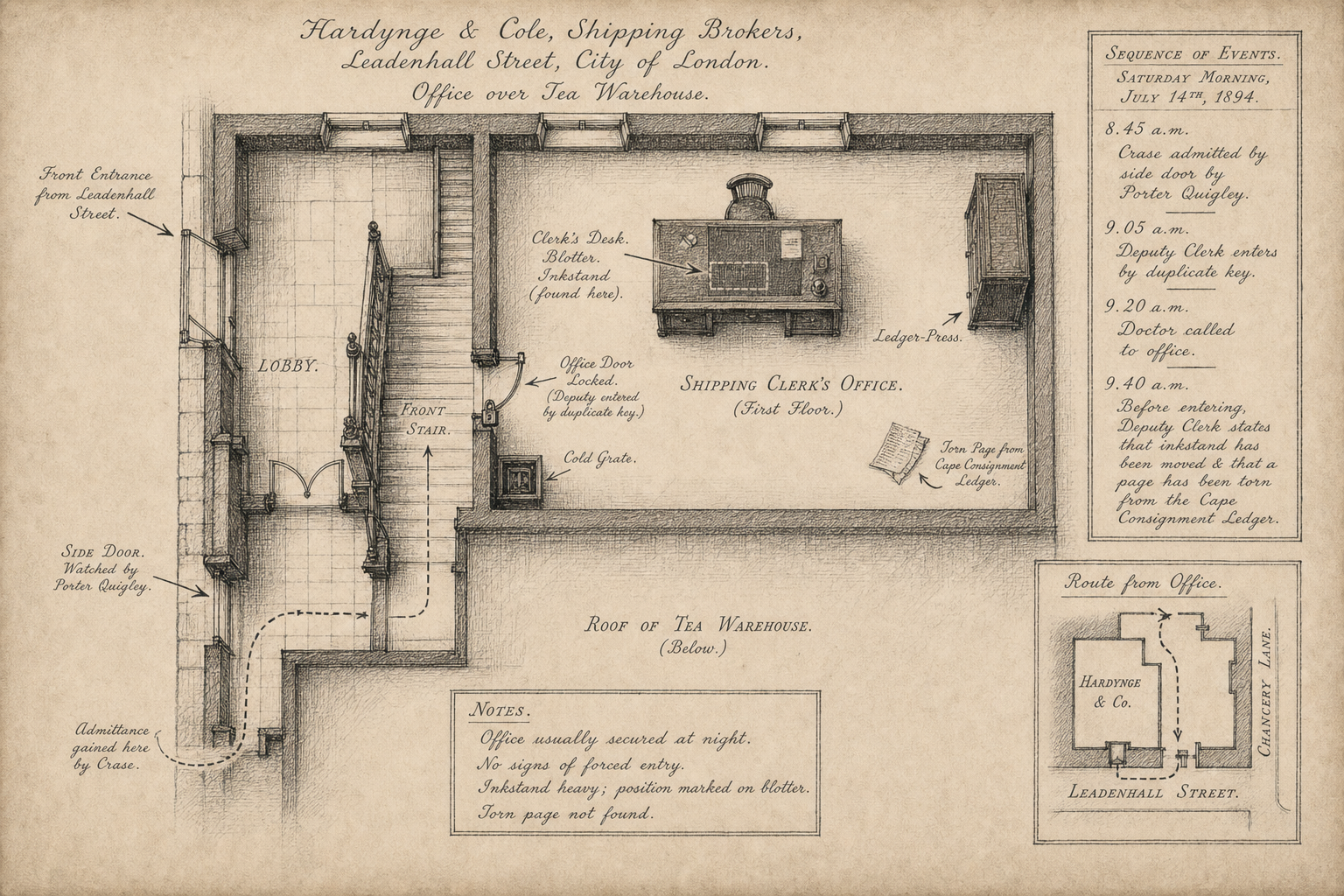
Hand-drawn case map for The Case of the Shipping Clerk's Inkstand, showing Hardynge & Cole, shipping brokers, Leadenhall Street, City of London.
The ground in question.
Setting
Hardynge & Cole, shipping brokers, Leadenhall Street, City of London
Time
Saturday morning, second Saturday of July 1894
Weather
Hot; a still City summer; the river haze visible from the window
Atmosphere
A panelled City office over a tea-warehouse; the smell of dust and dry tea; one ledger-press by the inner wall; a small grate cold at the back.

Section II

The Suspects

  • Mr Tobias Fenn

    Deputy clerk; the discoverer; the most vivid witness

    A spare, attentive man of forty, second-in-command at the office these six years. He had a quiet life in Stoke Newington and an unusual command of small detail. He gave, that morning, the most thorough account of the body's posture and the disordered desk that any of us had heard from a layman in such an hour.

  • Mr Quigley

    Office porter, fourteen years' service

    A heavy man of sixty, who had let Mr Crase in by the side door at a quarter to nine and had been at his post in the lobby until the doctor was called. He had heard nothing untoward.

  • Mr Drewett

    Regular client of the firm; in dispute over a freight account

    A prosperous man of fifty-five, who had had a long-running quarrel with Mr Crase over the carriage of a Cape consignment in May. He had not been at the office that morning.

  • Master Pyne

    Office boy, sixteen, three months in post

    A clean-faced lad of sixteen, on his first place. He had been in the lobby with the porter from a quarter to nine, and had been the first up the stair when the deputy raised the alarm.

Section III

The Evidence

  1. The doctor's certificate

    Dr Arden, called at twenty-five past nine, had pronounced an apoplexy on the strength of the position of the body and the absence of any wound or mark. The certificate had been written and signed before the deputy raised any question of the inkstand or the ledger.

  2. Mr Fenn's account before the office was entered

    The constable's slate records, at twenty to ten on the front stair before either had crossed the threshold, Mr Fenn naming the inkstand's left position, the body's right hand at the corner of the desk, and the open ledger's torn page as the Cape consignment of June. No man who entered the office for the first time at ten o'clock could have known any of these particulars from outside the door - and the only person who had been within between the porter's morning watch and the constable's arrival was the deputy himself.

  3. The inkstand at our arrival

    When we entered the office at ten o'clock, the inkstand stood on the right of the blotter, where the ink-pot's draught against the morning's air had carried a faint blot upon the right edge - the stand's habitual place for some weeks past, by Mr Quigley's confirmation.

  4. Mr Drewett's freight dispute

    The disputed freight account showed a quarrel of some twenty pounds between the office and Mr Drewett. He had been in dispute for two months and had not, by his own account, called at the office that week.

  5. The torn ledger-page

    The single torn page of the ledger, lying upon the desk by ten o'clock, contained the entries for a particular Cape voyage of June. The torn edge was clean and recent. The page itself was missing from its binding; whoever had taken it had carried it out of the office in his pocket.

Section IV

Statements & Testimony

  • Mr Quigley Reliable

    Office porter

    “"Mr Crase came in by the side door at quarter to nine, sir. The boy and I were at the lobby until ten o'clock. The deputy came up the front stair at five past nine. He let himself into the master's office at nine, by his duplicate key. He came down at twenty past nine and called for the doctor."”

  • Mr Fenn Partial

    Deputy clerk

    “"The master was at his desk, sir, his head upon the blotter. I called the doctor; the doctor pronounced an apoplexy at half past. I waited at the front stair for the constable; the constable came at twenty to ten and we entered together at ten o'clock to make our survey of the room."”

Section V

Your Verdict

Three picks render a verdict. Name the culprit, choose the method, and nail the keystone clue. We score all three — partial credit if you got the culprit but missed the method, full credit only if you got Holmes’s exact reasoning.

1. Name the culprit
2. Choose the method

Which of these accounts of the deed best matches the evidence?

3. Pick the keystone clue

Of all the evidence above, which single piece nails the case?

Choose a culprit, a method, and a keystone clue to render your verdict.