The 221B Daily

A new edition from Baker Street every morning.

Monday, 8 June 2026 | Difficulty I

The Case of the Notary's Three Witnesses

A will leaves everything to a distant cousin. The widow swears she did not sign it. The notary's clerk has already confessed.

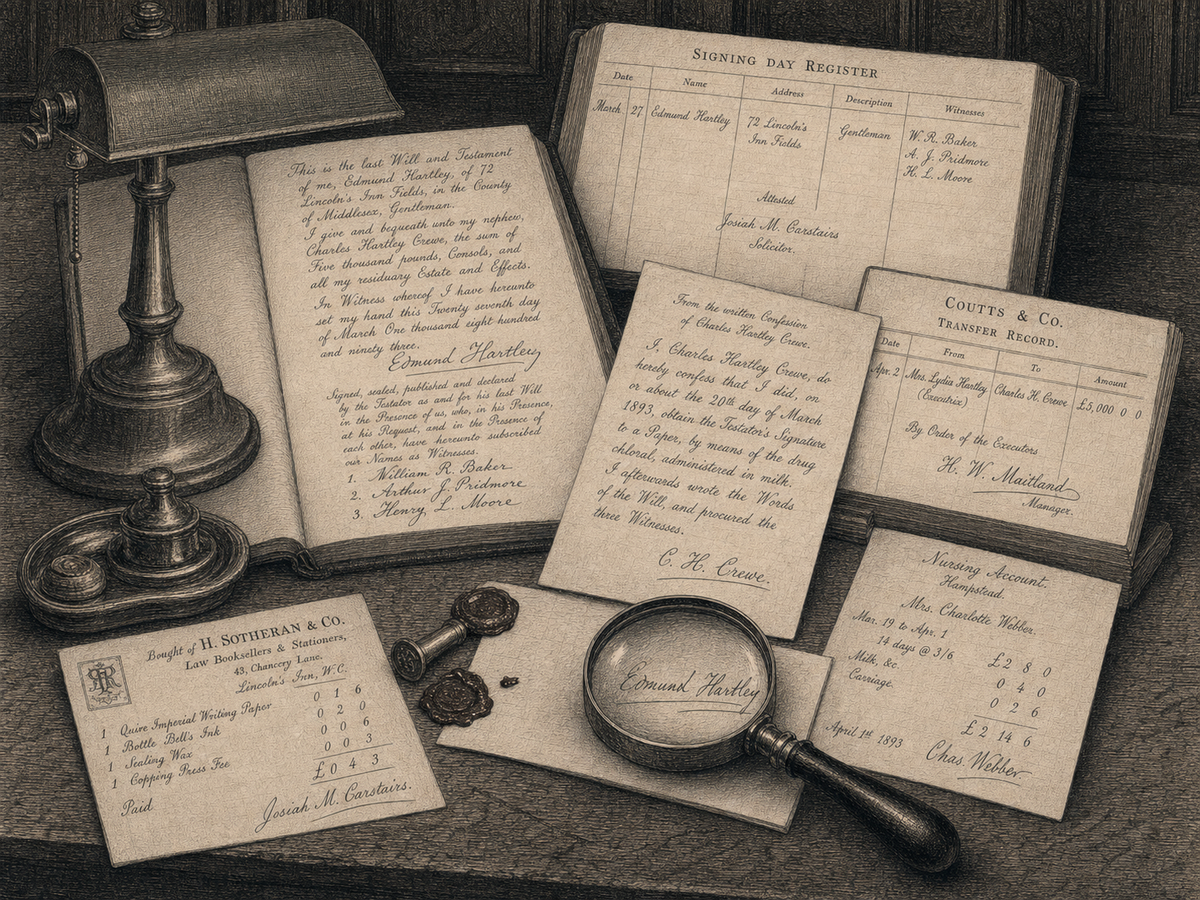
Engraved key object plate for The Case of the Notary's Three Witnesses.
Narrated by Dr Watson — the case as it stood before us
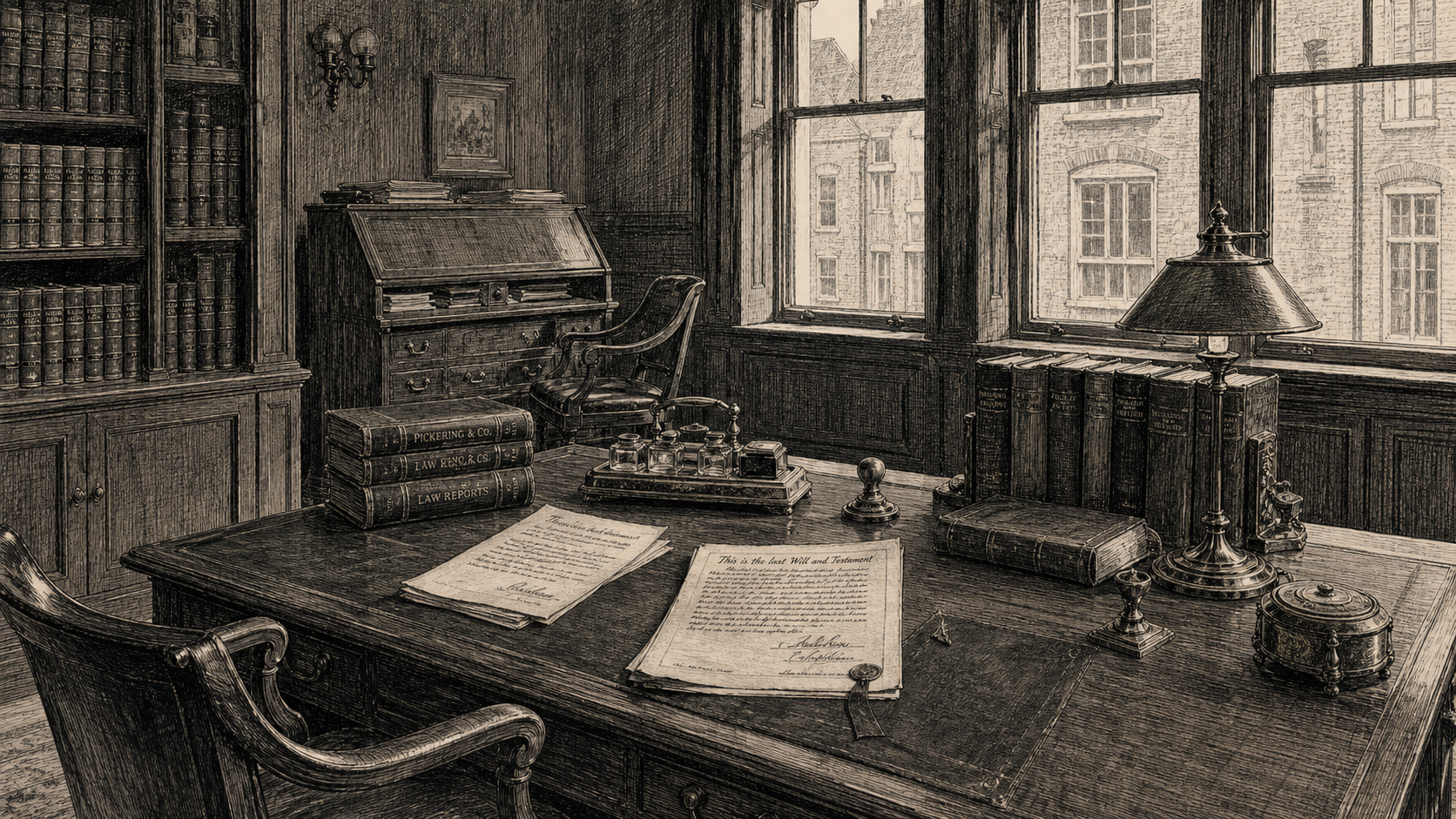
Victorian newspaper-style illustration for The Case of the Notary's Three Witnesses, set at Pickering & Co., solicitors, Lincoln's Inn.

Section I

The Scene

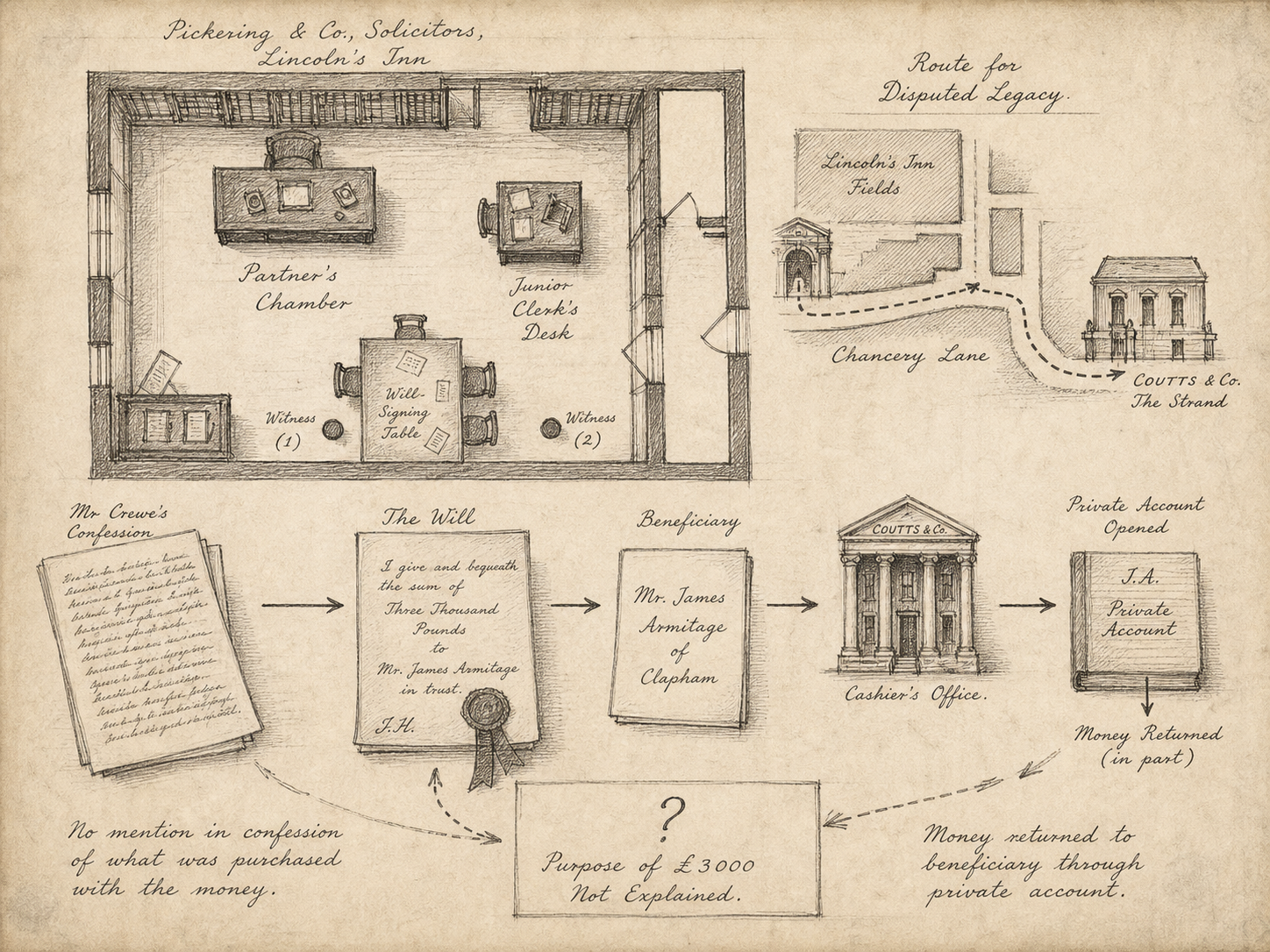
Hand-drawn case map for The Case of the Notary's Three Witnesses, showing Pickering & Co., solicitors, Lincoln's Inn.
The ground in question.
Setting
Pickering & Co., solicitors, Lincoln's Inn
Time
Monday morning, third week of January 1894
Weather
Crisp; a bright winter sun on the brick of the courts
Atmosphere
A panelled solicitor's chamber with three high windows; a partner's desk under a green-shaded lamp; the smell of leather-bindings and tobacco.

Section II

The Suspects

  • Mr Pickering

    Senior partner of Pickering & Co., solicitors

    A grave, white-bearded man of sixty, with a wife three years bedridden in a quiet villa at Hampstead. He had drawn the will at the late Mr Frith's instruction and had himself attended the signing. His own daughter was engaged, since Easter, to his junior clerk, Mr Crewe.

  • Mr Crewe

    Junior clerk, two years in chambers; the confessor

    A slight, anxious young man of twenty-three, who had walked into the Bow Street magistrates' office on Friday and confessed to having forged the late Mr Frith's signature at Mr Pickering's instruction. He was engaged to Mr Pickering's daughter and lived in modest Bloomsbury lodgings.

  • Mr Wattling

    Stationer of Chancery Lane, named witness to the will

    A respectable tradesman of fifty, whose attestation appeared on the will and who had no acquaintance with the Frith household beyond that single signing.

  • Mr Verrill

    Distant cousin, beneficiary under the disputed will

    A florid, prosperous man of forty-five, in shipping at Greenwich, who had received Mr Pickering's letter notifying him of the legacy on Christmas Eve and had retained his own counsel by Boxing Day. He had a clerk's friendship of long standing with Mr Crewe's brother-in-law.

Section III

The Evidence

  1. Mr Crewe's confession

    The young clerk's confession was made of his own accord on Friday morning. It described in particular detail the route by which the late Mr Frith's signature had been forged — but, on careful reading, did not describe the use to which the proceeds had been put. He could not, when pressed, say what the legacy of three thousand pounds had purchased.

  2. Mr Pickering's wife at Hampstead

    Mr Pickering's wife was three years in a quiet villa with two trained nurses and a regular visit from a Harley Street consultant. The cost of her care, on Mrs Pickering's brother's reluctant testimony, was upwards of three pounds the week.

  3. Mr Verrill's friendship

    The beneficiary's only City connection of the Frith household was through Mr Crewe's brother-in-law, a clerk in a shipping office. They had drunk together regularly at the Black Bull on Friday evenings these three years.

  4. The signing-day register

    Mr Pickering's day-book for the date of the signing showed three appointments: the Frith signing at eleven, a half-hour conference at noon, and an afternoon spent at Hampstead. Mr Crewe was at his desk in the outer office at noon, by the chambers' time-book.

  5. The bank's record of the transfer

    The legacy was to be paid through Coutts on probate. Mr Pickering had, on Christmas Eve, drawn against his own private account at Coutts a sum of one hundred pounds for his wife's nursing for the quarter — a private matter the firm's books did not show.

Section IV

Statements & Testimony

  • Mr Crewe Partial

    Junior clerk; the confessor

    “"It was at Mr Pickering's instruction, sir. I forged the late Mr Frith's signature on the will. I am very sorry. I do not know what was done with the money. I was given a small sum for my trouble. I — I cannot say more."”

  • Miss Pickering Partial

    Daughter of the senior partner; Mr Crewe's fiancée

    “"My father has been a saint to my mother these three years, Mr Holmes. We have managed by careful economies. I will not — I cannot — speak ill of him. Mr Crewe is a good man and I love him; if he says he did this thing then he did this thing."”

Section V

Your Verdict

Three picks render a verdict. Name the culprit, choose the method, and nail the keystone clue. We score all three — partial credit if you got the culprit but missed the method, full credit only if you got Holmes’s exact reasoning.

1. Name the culprit
2. Choose the method

Which of these accounts of the deed best matches the evidence?

3. Pick the keystone clue

Of all the evidence above, which single piece nails the case?

Choose a culprit, a method, and a keystone clue to render your verdict.