It was the morning of the third Thursday of July 1894 when a telegram from Sir Hugo Trant of Marlow Hall, Berkshire, summoned us by the early train.
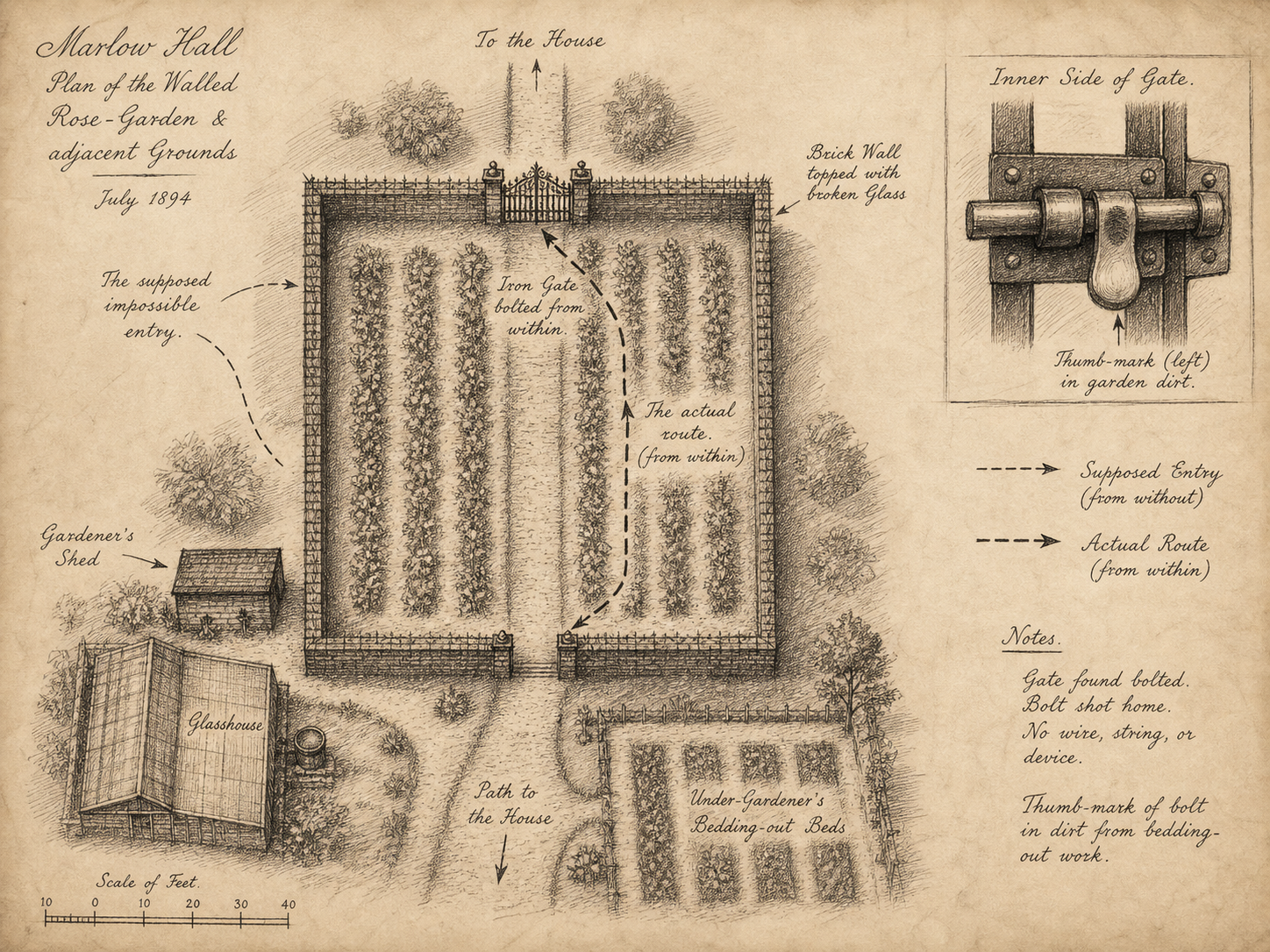
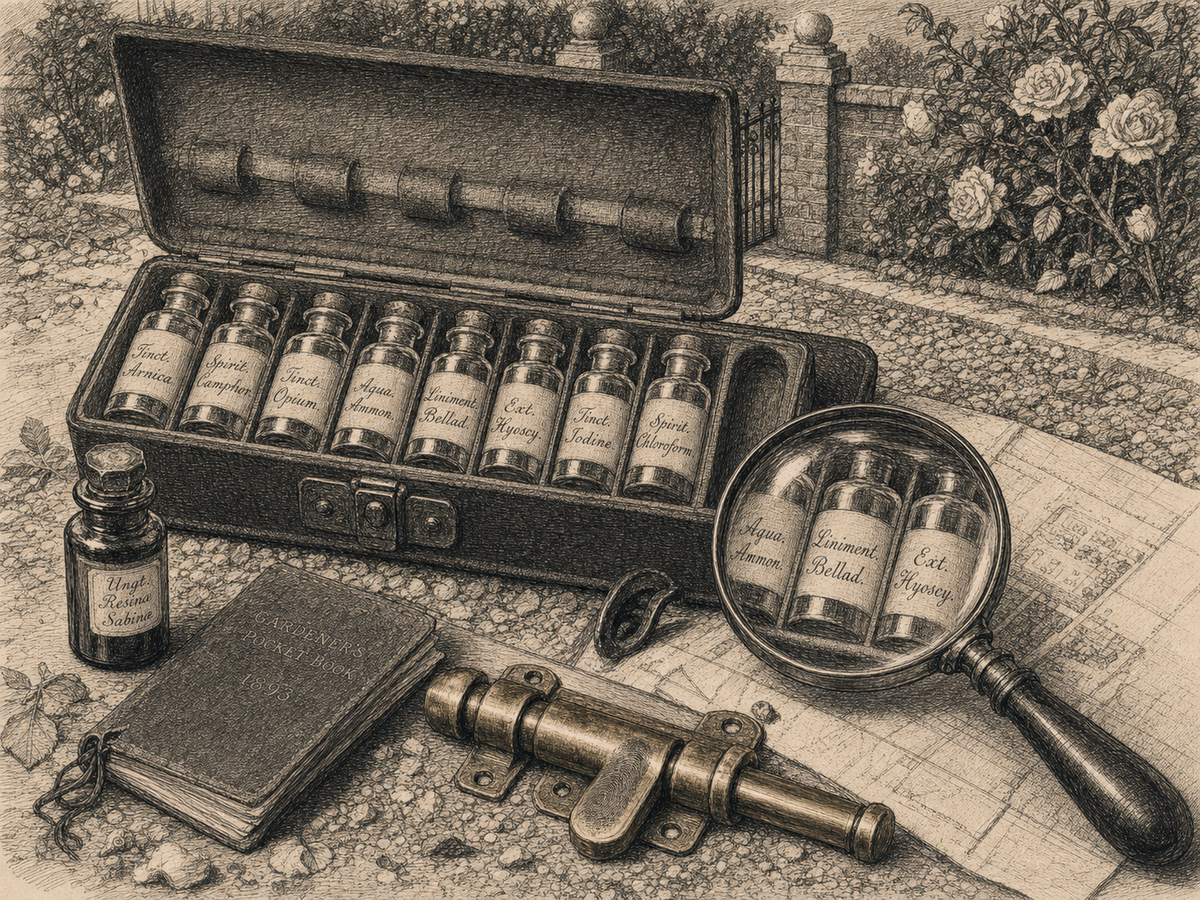
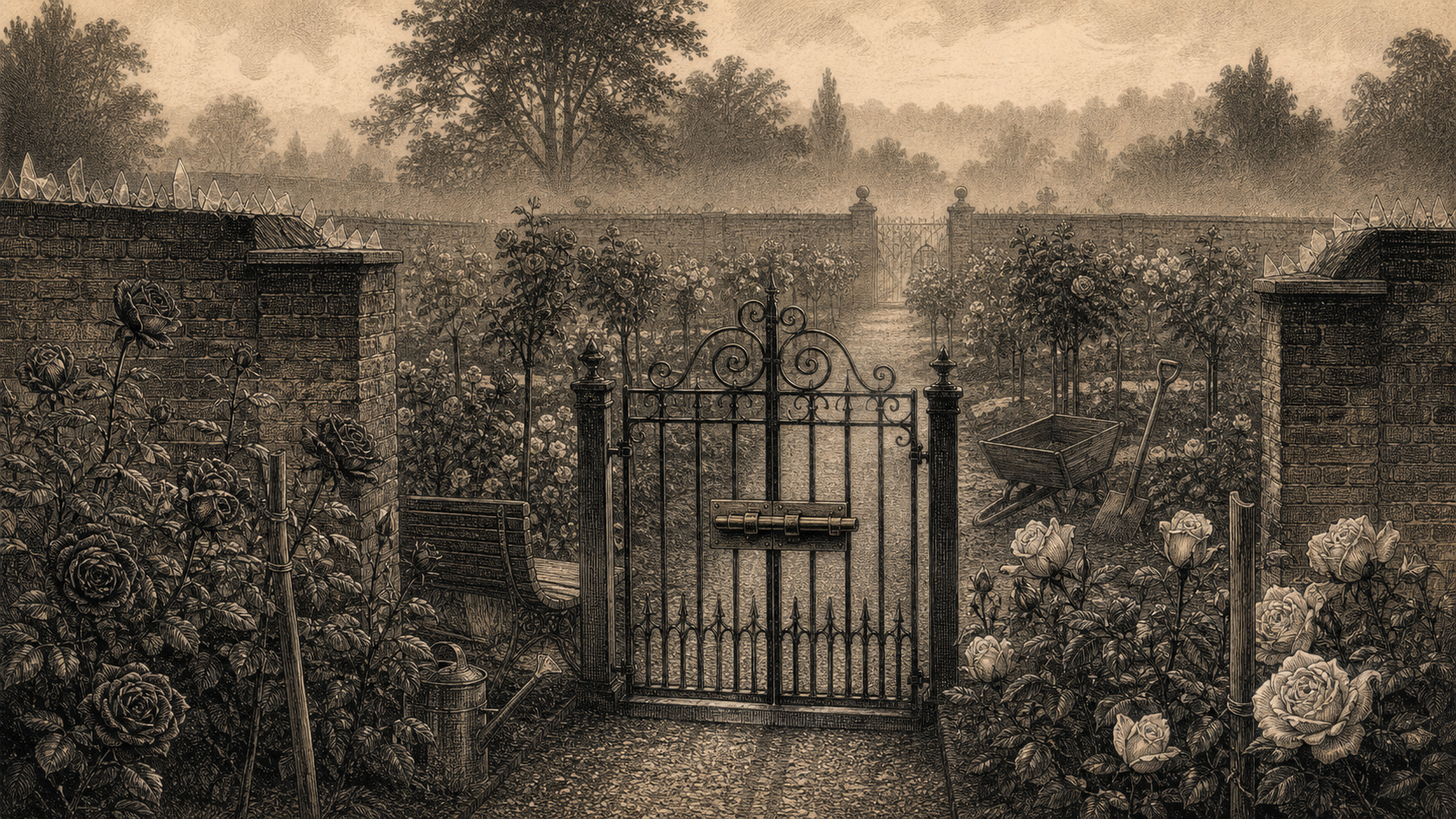
Marlow Hall lay an hour west of Maidenhead, a long, low house of warm brick set among well-tended gardens. Sir Hugo's head gardener, Mr Bayle, had been found at first light by the under-gardener — sprawled in the gravel-walk between the rose-beds, his medical bag open beside him, a single empty space among the row of small chemist's vials. The garden's iron gate was bolted upon its inner side. The walls of the rose-garden were nine feet high and the brick crowned with broken glass. There was no other way in or out.
We travelled down. A hansom waited at the village rank, dark green and freshly varnished, its driver a heavy-shouldered man with a port-wine stain on his left temple, who touched his whip-handle to the brim of a hat with a green band as we passed. Sir Hugo's brougham took us up to the house through an avenue of limes, and from the house we walked round to the rose-garden's outer gate, where Sir Hugo himself awaited us — pale, composed, and oddly hesitant before a question he could not have anticipated.