It was a wet Saturday in the second week of March 1893 when Mr Anstruther, manager of the Coronet Theatre in Wellington Street, came up our stairs at three in the afternoon with a face the colour of his playbills.
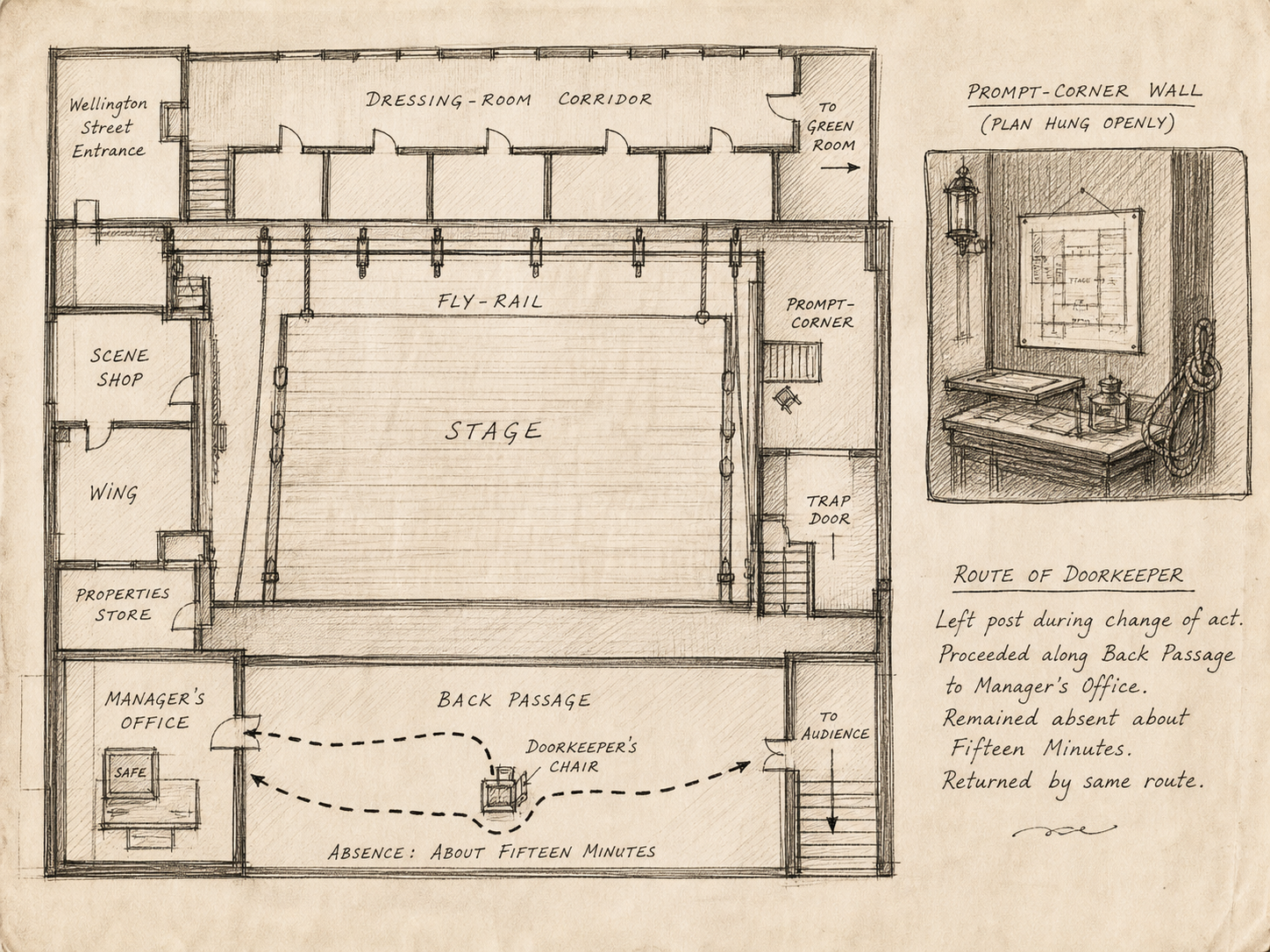
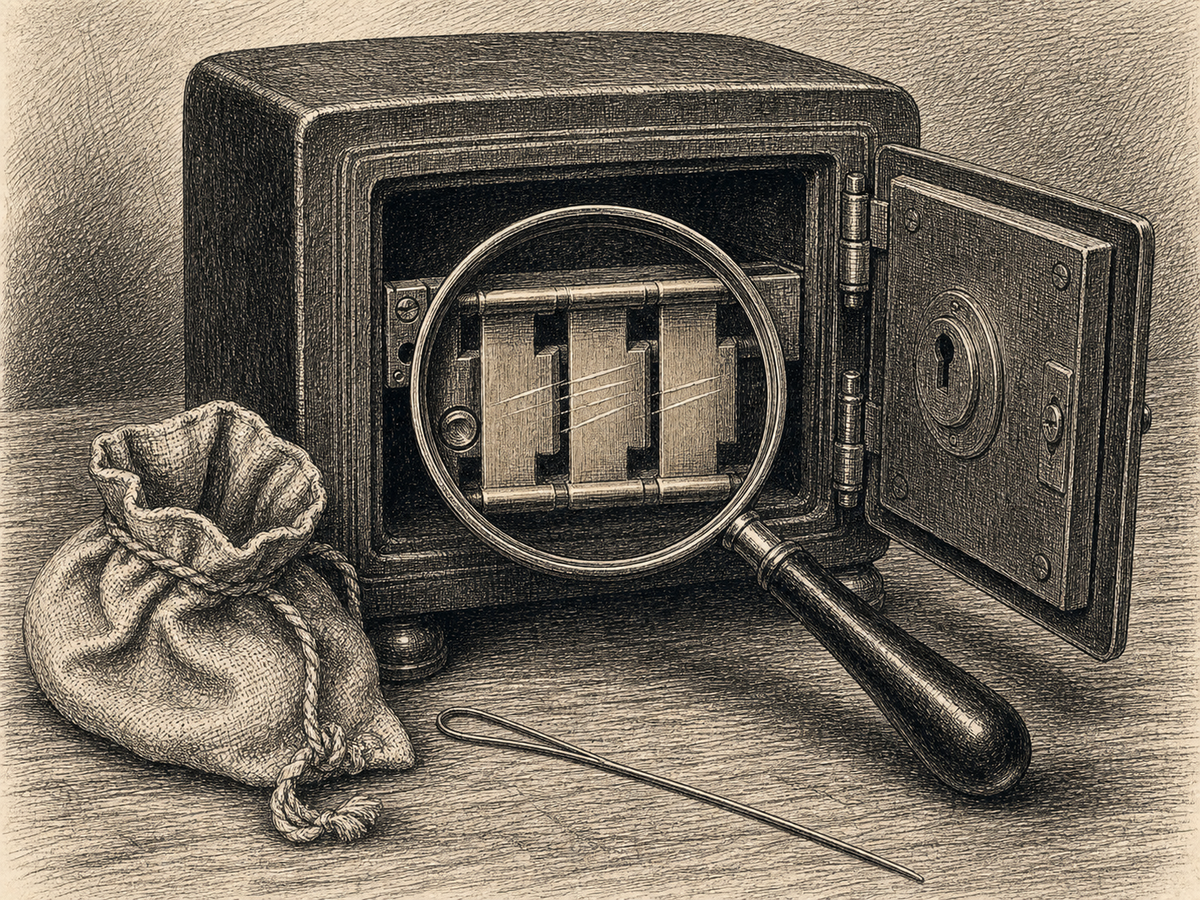
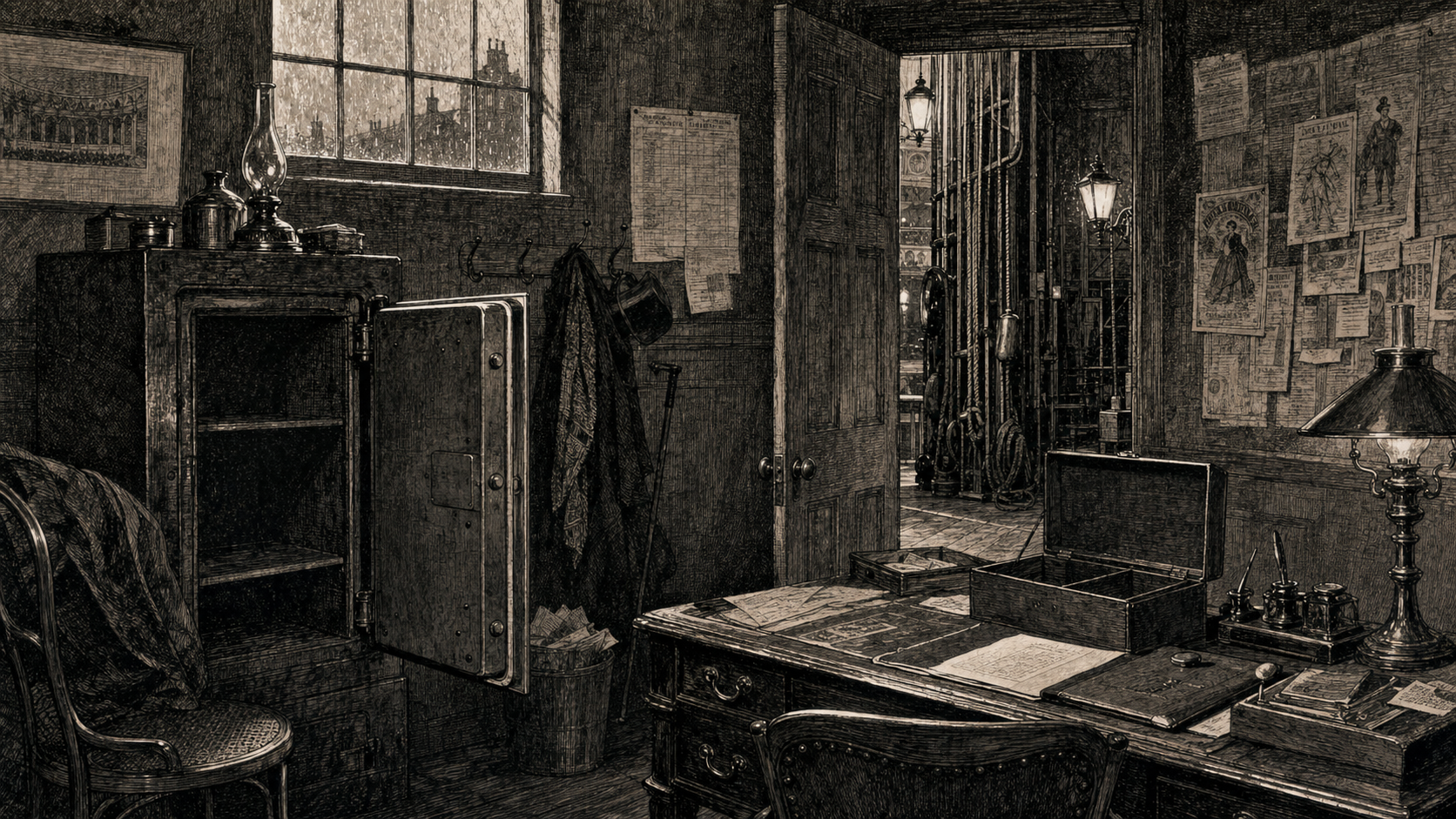
"Forty pounds, Mr Holmes. The week's wages, locked into my own safe at half past one this morning. The matinée was on, the company in their dressing-rooms, the doorkeeper at his post. I went out at two o'clock to the bank, came back at half past, and found the safe-door swung open and the box empty. The lock has not been forced."
There were, by his account, five people about the back of the theatre that afternoon: himself, two stage hands, the lead actress's husband (who had quarrelled with her on Wednesday and had come to make amends), and the doorkeeper. The matinée audience had been counted in front and could not have come behind. Mr Anstruther had, he confessed, owed his backers a payment by Tuesday next, but he had not, he said, taken his own takings; the loss was his ruin, not his salvation.
We rode down with him in a hansom. A thin man in a grey ulster was pacing the corner of Wellington Street as we left, and a deep cough turned his face to the gas-lamp before he resumed his post. Holmes set down his cane on the seat and said only, "The safe, Mr Anstruther — and the doorkeeper's chair."