It was the second week of October, and a thin, persistent rain had been falling upon Baker Street since Sunday evening. I had risen late, finding Holmes already at the breakfast table, his coffee untouched and a card in his hand. "A client at half past ten, Watson," he said without looking up. "A Mrs Eleanor Whitcombe, of Westbourne Terrace. The card mentions only that a silver christening cup has gone from a locked cabinet, and that the household has been intact since the cup was last seen." I expressed the opinion that locked cabinets and intact households together suggested an inside hand. Holmes inclined his head. "You see the obvious, Watson. The question, as ever, is which hand." Mrs Whitcombe was shown up at the appointed hour, a small, composed woman of perhaps forty, dressed in mourning grey. Her late husband's christening cup, a piece of plate worth perhaps twelve pounds in silver but irreplaceable in sentiment, had been discovered missing on the previous Friday morning when she had gone to take it down for polishing in advance of her nephew's christening. The cabinet had been locked. The single key had hung, as it always did, upon a hook above her writing-desk. She had spoken of the matter to no one outside the four walls of her household. The police, she said with some embarrassment, had been called and had been able to suggest only that one of the servants must have been clever with the lock.
The 221B Daily
A new edition from Baker Street every morning.
Monday, 27 April 2026 | Difficulty I
The Case of the Bayswater Christening Cup
A silver christening cup gone from a locked cabinet. Four people had access to the house. The household has not left.

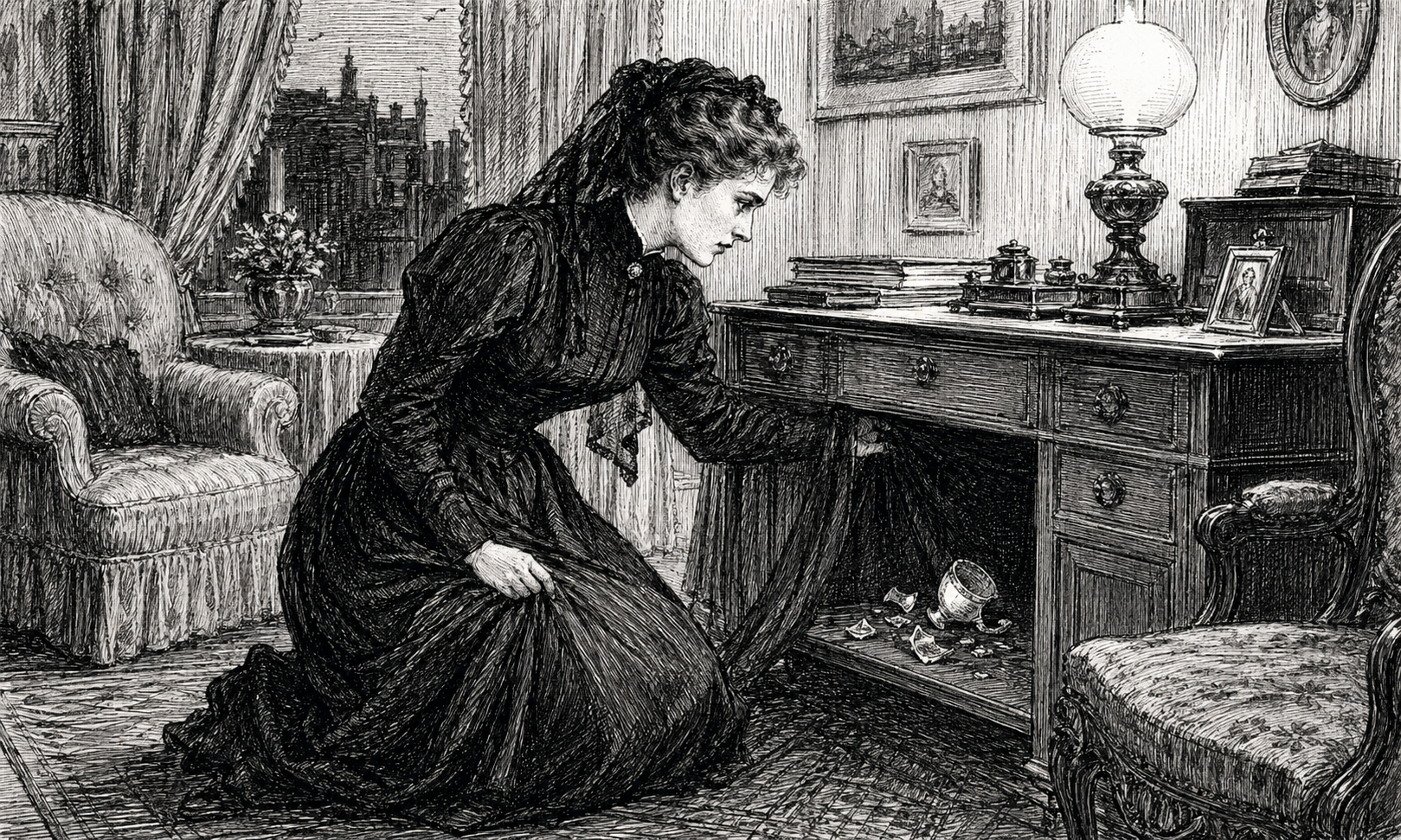
Sidney Paget · The Strand Magazine, September 1891 · Public Domain
Watson’s account
Section I
The Scene
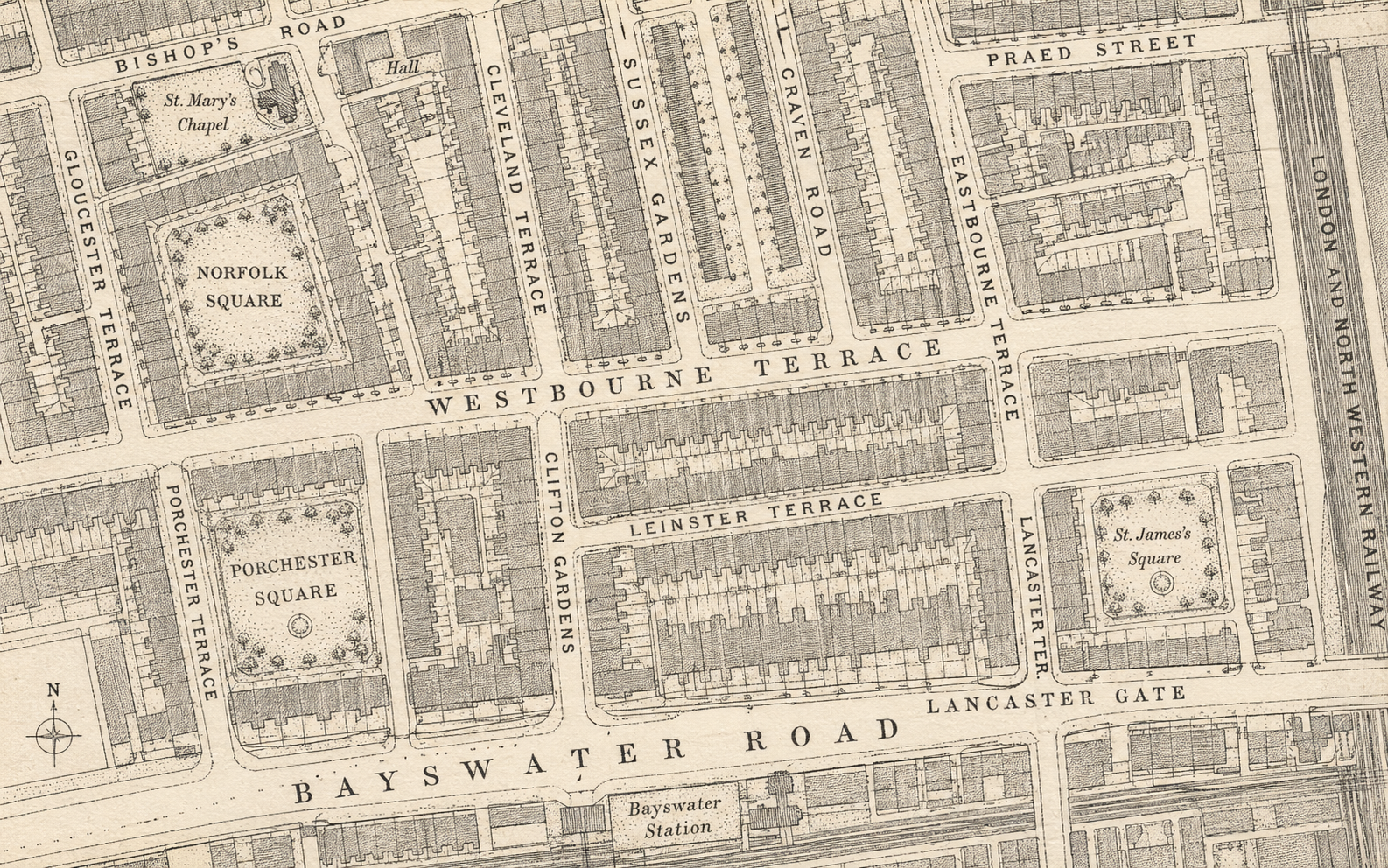
- Setting
- 12 Westbourne Terrace, Bayswater — the Whitcombe residence
- Time
- Late morning, Tuesday, mid-October 1894
- Weather
- Light rain, low cloud, gas-lamps still lit at the corners
- Atmosphere
- A respectable widow's house in subdued mourning, every surface lately polished, every face carefully composed.
Section II
The Suspects
-
Mrs Annie Pegg
Cook, eleven years in the household
A sturdy, broad-handed woman of fifty, much aggrieved at the suggestion of theft. She produced, of her own accord, the entire contents of her trunk and box for our inspection. Her wages were paid weekly, and she had no debts of which she knew.
-
Miss Lottie Burns
Parlourmaid, six months in the household
A pretty, pale girl of nineteen, lately of a draper's establishment in Marylebone. She was nervous in our presence, twisting her apron-strings, but answered every question put to her without hesitation. Mrs Whitcombe spoke warmly of her.
-
Mr Joseph Pemberton
Nephew, Whitcombe's late husband's sister's son
A thin, sharp-featured young man of twenty-six, employed in an insurance office in the City. He had dined at Westbourne Terrace on the Wednesday evening, two days before the cup was discovered missing, and had taken his leave at a quarter to eleven. He owed, by his own admission, a small sum at his club.
-
Mr Charles Whitcombe
The late husband's elder brother, occasional caller, lives in Reading
A florid, expansive gentleman of sixty, who had stopped at the house on the Thursday afternoon for a half-hour's call before catching the four o'clock from Paddington. He was not, by Mrs Whitcombe's account, on intimate terms with her, but had come to enquire after his nephew's christening arrangements.
Section III
The Evidence
-
The cabinet's lock
An ordinary brass cabinet lock, of a pattern much used in the better domestic furniture of the eighties. Holmes examined it under his lens for some minutes and concluded it had been opened with its proper key, not picked. There were no scratches upon the brass.
-
The hook above the desk
A small brass hook screwed into the panelling beside Mrs Whitcombe's writing-desk in the morning-room. The key hung upon it openly. The hook is visible from the doorway and from any point in the morning-room.
-
An entry in the morning-room visitors' book
Mr Joseph Pemberton's name appears in the morning-room visitors' book on the Wednesday evening, with the additional notation "borrowed Pickwick, returned". He had, after the family supper, sat alone in the morning-room for perhaps twenty minutes while his aunt was occupied with the parlourmaid in the dining-room.
-
A pawnbroker's ticket
A folded pawnbroker's receipt, from a Mr Atterbury of Praed Street, dated the Friday morning. The article pawned is described only as "silver christening cup, monogram E.W., twelve pounds advanced". The ticket was found, by the constable on Saturday, beneath the kitchen door-mat.
-
Miss Burns's references
The parlourmaid was engaged in April upon the recommendation of a Mrs Sankey of Marylebone. Holmes despatched a wire to Mrs Sankey while we waited; the reply came within the hour and confirmed the girl's character in every particular.
-
The cook's accounts
Mrs Pegg keeps a small ledger of household expenses, neat and complete to the penny. The week of the disappearance shows nothing irregular.
Section IV
Statements & Testimony
-
Mrs Eleanor Whitcombe Reliable
Mistress of the household, the client
“"The key has hung upon that hook for fifteen years. Every soul who comes into my morning-room sees it. I had supposed, foolishly, that to see a thing constantly is to cease to notice it."”
-
Constable Edwin Pratt Reliable
Of the Paddington division, called on the Friday afternoon
“"I made the rounds of the local pawnbrokers on the Friday evening, sir, as is my habit in such matters. I found nothing answering the description. The receipt under the kitchen door-mat I came upon by chance on the Saturday."”
-
Mr Atterbury Reliable
Pawnbroker, of 142 Praed Street
“"A young gentleman, sir, dark-haired, thin, in a dark coat — I should know him again, certainly. He came in shortly after I opened on the Friday morning. He said the cup was an aunt's gift to him as a child, and that he had no further use for it. The transaction was perfectly regular."”
Section V